

Villa and Resort Landscape Design in Bali

Villa and Resort Landscape Design in Bali isn’t just about plants and patios. It’s the physical and visual framework that ties the architecture to its environment, controls outdoor usability, and defines the first impression of every guest or resident.
Done right, it enhances experience, increases property value, and solves technical site challenges like drainage, privacy, and circulation. Done poorly—or as an afterthought—it introduces disorder, maintenance headaches, and disconnect between indoor and outdoor flow.
In Bali, where natural beauty and indoor–outdoor living are core to lifestyle and tourism, landscape design is a critical system, not surface-level aesthetics.
This article breaks down the six essential components of landscape design in high-end villa and resort development, based on best practices tailored to tropical site conditions, regional logistics, and high-performance design expectations.
We’ll cover:
- What planting schedules really control
- Why access flow affects more than paths
- How outdoor zones structure privacy and use
- The role of hardscape in site function
- Best practices in softscape planning
- Drainage and irrigation strategy that works in wet/dry season extremes
Timing, Logic, and Locality
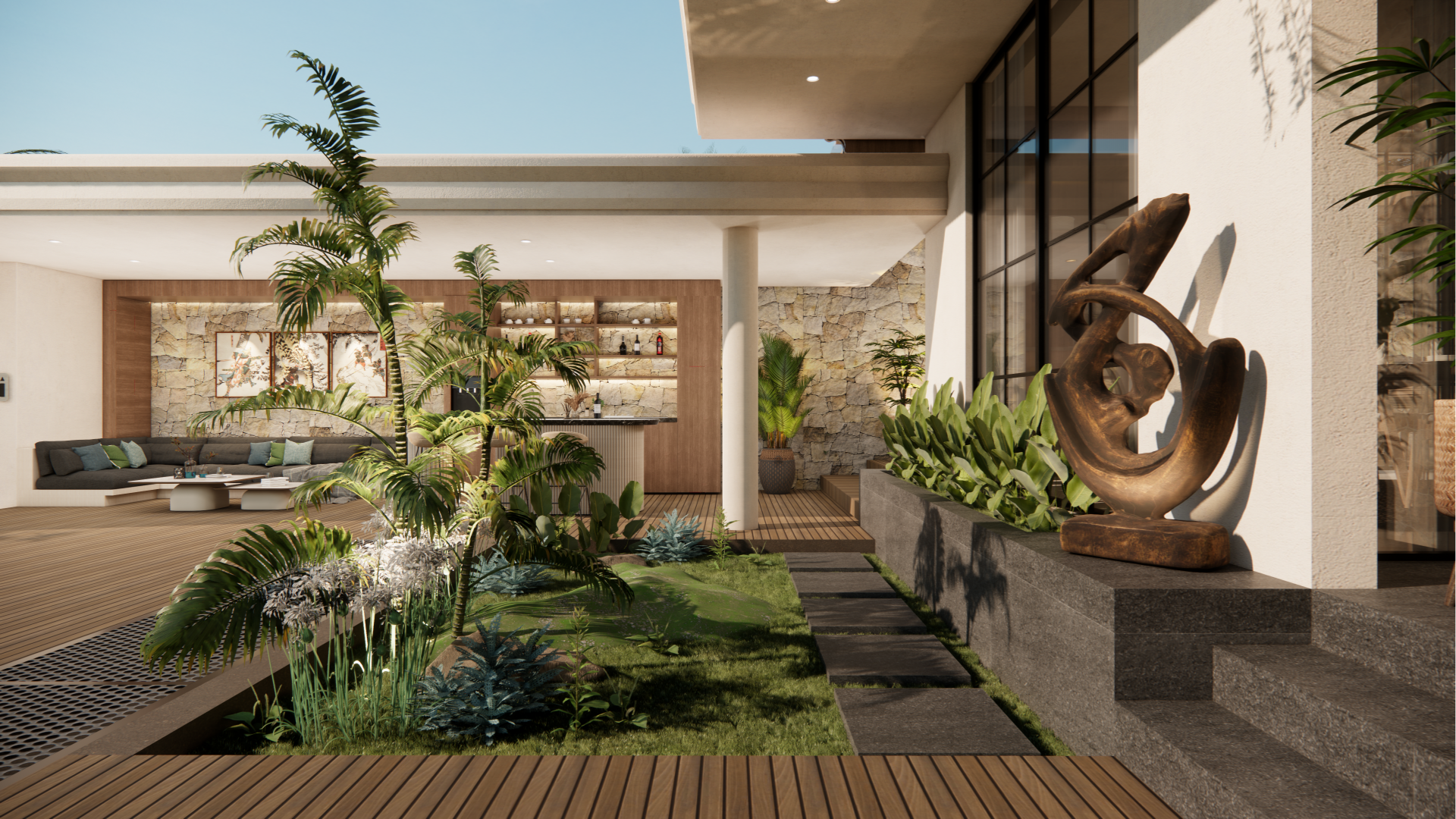
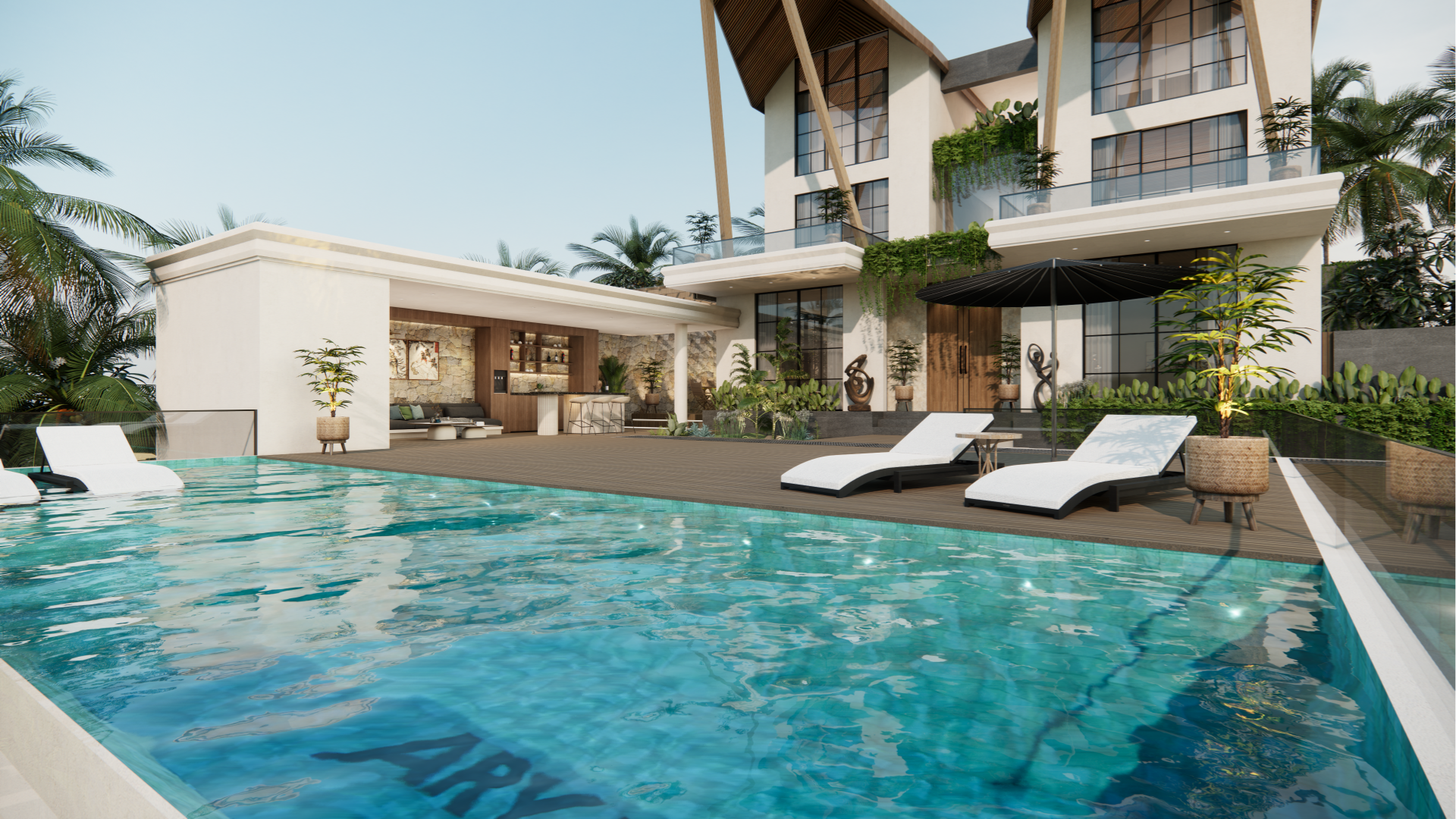
A planting schedule is a living document that aligns botanical intent with site logistics, climate tolerance, and phased installation. For villas and resorts in Bali, where design relies heavily on lush outdoor integration, this document dictates the tone for space, shading, privacy, and long-term upkeep.
Best Practices for Planting Schedules in Bali:
- Design must respond to elevation, sun exposure, soil depth, and microclimate—not just aesthetic goals. Palms on a windy ridge? Dead in months. Bougainvillea in deep shade? Won’t bloom.
- Always list botanical (not just common) names, expected mature size, growth speed, and seasonal changes. This ensures clarity between designer, supplier, and installer.
- Good planting has tiers: canopy, mid-story, groundcover. This builds shade, depth, and visual structure. Don’t just “fill” the site—compose it.
- Avoid rework and waste by aligning delivery with site readiness. Trees go in after heavy works, but soil prep and root barrier installation happen early.
- Prioritize Native or Tropical-Adapted Species that require less irrigation, less fertilization, and have higher survival rates in Bali’s climate extremes.
Sample Table: Planting Schedule Format
| Botanical Name | Local Name | Tier | Light Requirement | Notes |
|---|---|---|---|---|
| Alstonia scholaris | Pule | Canopy | Full sun | Use as street shade tree |
| Plumeria rubra | Kamboja | Mid-story | Full/partial sun | Strong scent; seasonal flowering |
| Zamia furfuracea | Sikas | Groundcover | Partial sun | Avoid water-logging |
Designing Functional Outdoor Movement
Circulation planning is the backbone of functional landscape design. It dictates how people move through the property—guests, staff, vendors—and how outdoor zones are accessed, experienced, and maintained. In Bali’s villa and resort builds, circulation impacts everything from first impressions to back-of-house logistics.
Strategic Circulation Planning Must Include:
- Paths from arrival to lobby, rooms, pools, and shared amenities should be direct but scenic. Materials must be comfortable underfoot, especially for barefoot or wet-foot traffic.
- Delivery zones, maintenance paths, and housekeeping routes must be discreet and efficient. These are often overlooked, leading to awkward crossover or excessive visibility of operations.
- Fire truck turnaround radius, stretcher-width pathways, and equipment access for pumps or generators must be planned into the hardscape from day one.
- Gravel paths in high-traffic zones wear quickly and become unsafe in wet season. Stepped transitions must be consistent, lit, and drain properly.
- Dead ends and confusing forks reduce usability. Path hierarchy should be clear—main vs secondary vs restricted. Landscaping should subtly guide, not obstruct.
Checklist: What to Lock into Circulation Drawings
- Entry sequence and drop-off layout
- Accessible routes (slope, surface, clear width)
- Drainage slope across all paving
- Material specification per path type
- Lighting integration (bollards, step lights, sensors)
- Wayfinding if site scale requires it
Design Tip
Use planting to shield and soften transitions between zones.
How Landscape Zoning Shapes Privacy, Use, and Flow
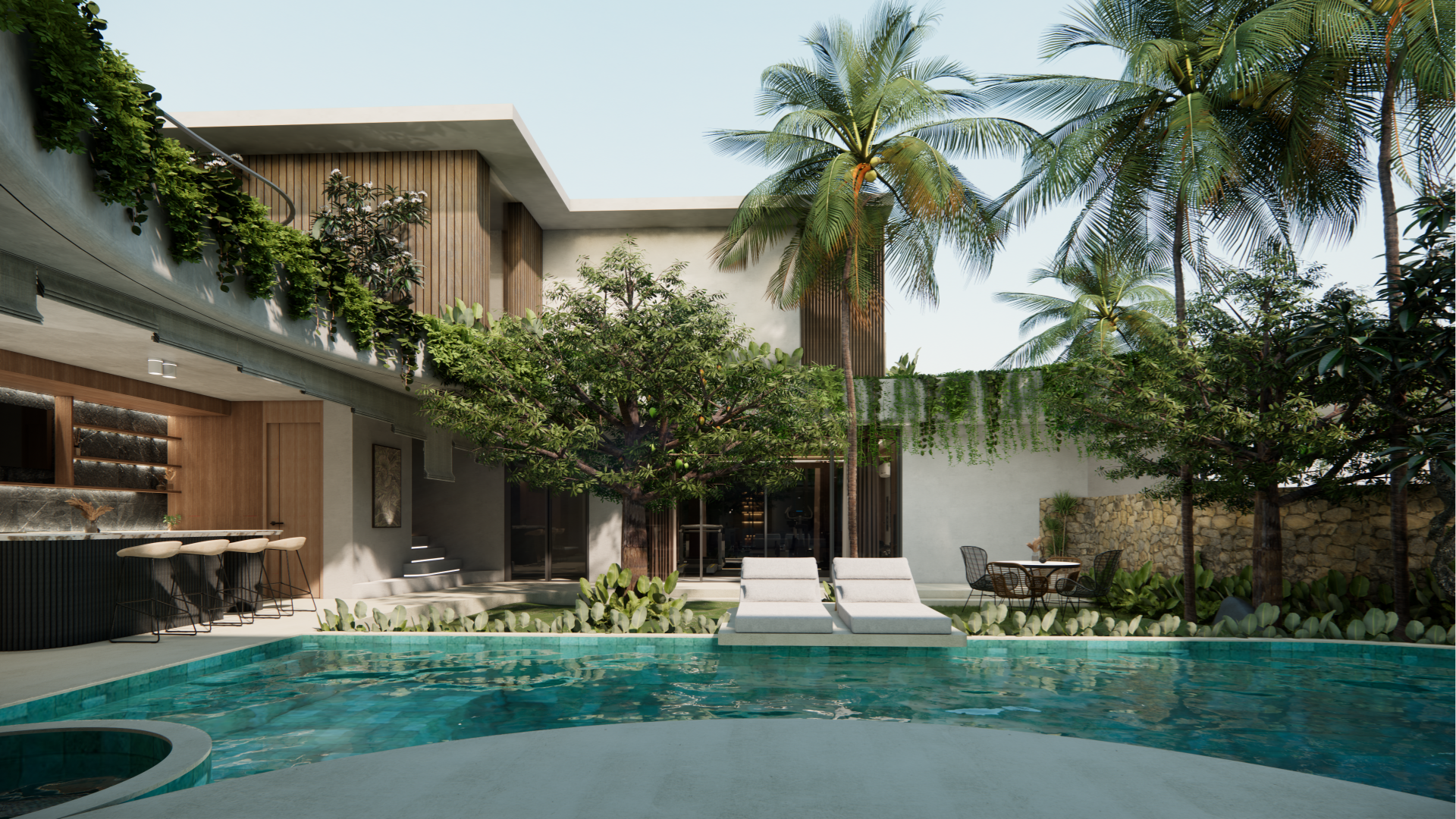
Outdoor spatial zoning defines how a property works—not just visually, but operationally. In high-end villas and resort projects, zoning determines what guests experience, how staff move, and how the site supports both private and shared functions without overlap or confusion.
Key Outdoor Zones in Villa and Resort Projects
- Courtyards, plunge pools, or daybeds that connect directly to suites or villas. These need screening, sound buffers, and privacy planting—while still feeling open.
- Pools, lounges, fire pits, or event lawns. These must feel accessible and attractive without dominating the site or creating crowding near rooms.
- Staff circulation, refuse, service entries, laundry drop, equipment access. These zones must exist—but never disrupt guest experience.
- Verandas, covered walks, terraces. These buffer indoor and outdoor areas, providing shade, circulation, and moments of pause between functions.
Table: Landscape Zone Characteristics
| Zone Type | Design Focus | Common Mistakes |
|---|---|---|
| Private Guest Areas | Privacy, seclusion, small-scale comfort | Overexposed to main paths; noisy plantings |
| Shared Amenity Zones | Accessibility, openness, lighting | No zoning leads to overcrowding or confusion |
| BOH Circulation | Discreet routing, utility integration | Crosses guest zones, visible waste handling |
| Transitional Spaces | Shade, airflow, seamless movement | Poor drainage or unclear functional identity |
Best Practice
Landscape zoning should be tied directly to architecture and operations. Every outdoor space must have a defined purpose, not just be “leftover area.” Planting, hardscape, lighting, and drainage must all support each zone’s function. Additionally, to avoid failures in the Construction process, the staging of the Landscape implementation and selections should be coordinated with the
Structuring Outdoor Function
Hardscape defines the permanent structure of outdoor space. In villa and resort projects, it shapes movement, anchors usable zones, and dictates the long-term maintenance burden. It’s also one of the most expensive and permanent elements of landscape done wrong, which is costly to fix.
In Bali’s tropical climate and sloped or coastal sites, hardscape must be engineered for drainage, thermal performance, and slip resistance.
Every hardscape plan must be cross-checked with structural and civil drawings. Detailing should include section cuts, drainage layers, fixings, and substrate preparation. If it’s not on the drawing, it won’t be realized correct.
Core Hardscape Elements in Villa and Resort Landscape Design
- Pathways and Terraces must balance comfort (underfoot) with drainage and layout clarity. Avoid materials that retain heat or become slippery when wet.
- Retaining Walls are tequired on sloped sites. Must integrate weep holes, subdrainage, and top-edge detailing to avoid water accumulation or failure.
- Staircases and Level Transitions with consistency in tread/riser ratio is critical. Changes in level should align with both structure and natural topography.
- Decking and Boardwalks should allow airflow and water movement. Use hardwood or composite with non-corrosive fixings in coastal zones.
- Drainage Channels and Grates often overlooked in design phase, but critical for wet-season performance. These must be coordinated with slab levels and paving falls.
Design Tips That Separate High-End Landscape from Generic Builds
- Avoid Standard Pavers: Many off-the-shelf pavers heat up fast, crack under weight, or stain easily in Bali’s climate. Instead, specify natural stone with tested performance or high-grade terrazzo.
- Detail Expansion Joints: Large slabs without joints will crack in tropical heat. Design joints into the visual layout, not as afterthoughts.
- Don’t Undersize Slopes: A 1% gradient isn’t enough on tropical sites with high rainfall. Use 1.5–2% minimum for exposed surfaces, with concealed flow paths.
- Think in Sections: Design in vertical as well as plan view. Many hardscape failures happen where surface, subgrade, and drainage layers are poorly detailed.
- Use Edge Restraints: Without hard edge restraints, gravel and soil creep into pavers or decking over time, destroying finish lines and trip performance.
Common Failures That Undermine Hardscape Integrity
| Poor Detail | Result |
|---|---|
| No drainage under decking | Moisture buildup, wood decay, mosquito zones |
| Wrong adhesive for stone | Pavers detach or shift after one wet season |
| Inconsistent risers in stairs | Trip hazard, poor accessibility |
| No sub-base compaction | Settlement, pooling, cracking |
Building in Tropical Landscapes
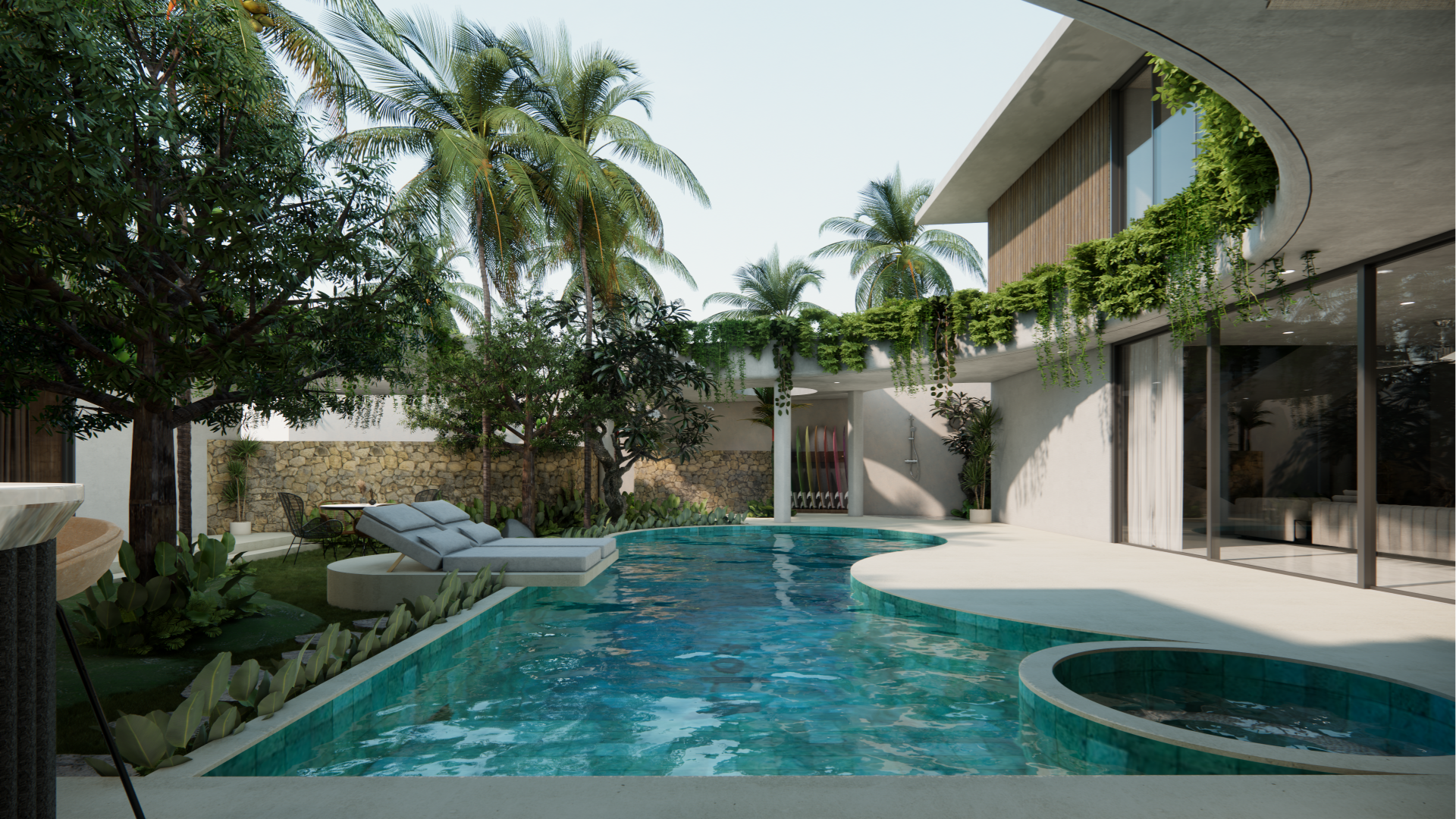
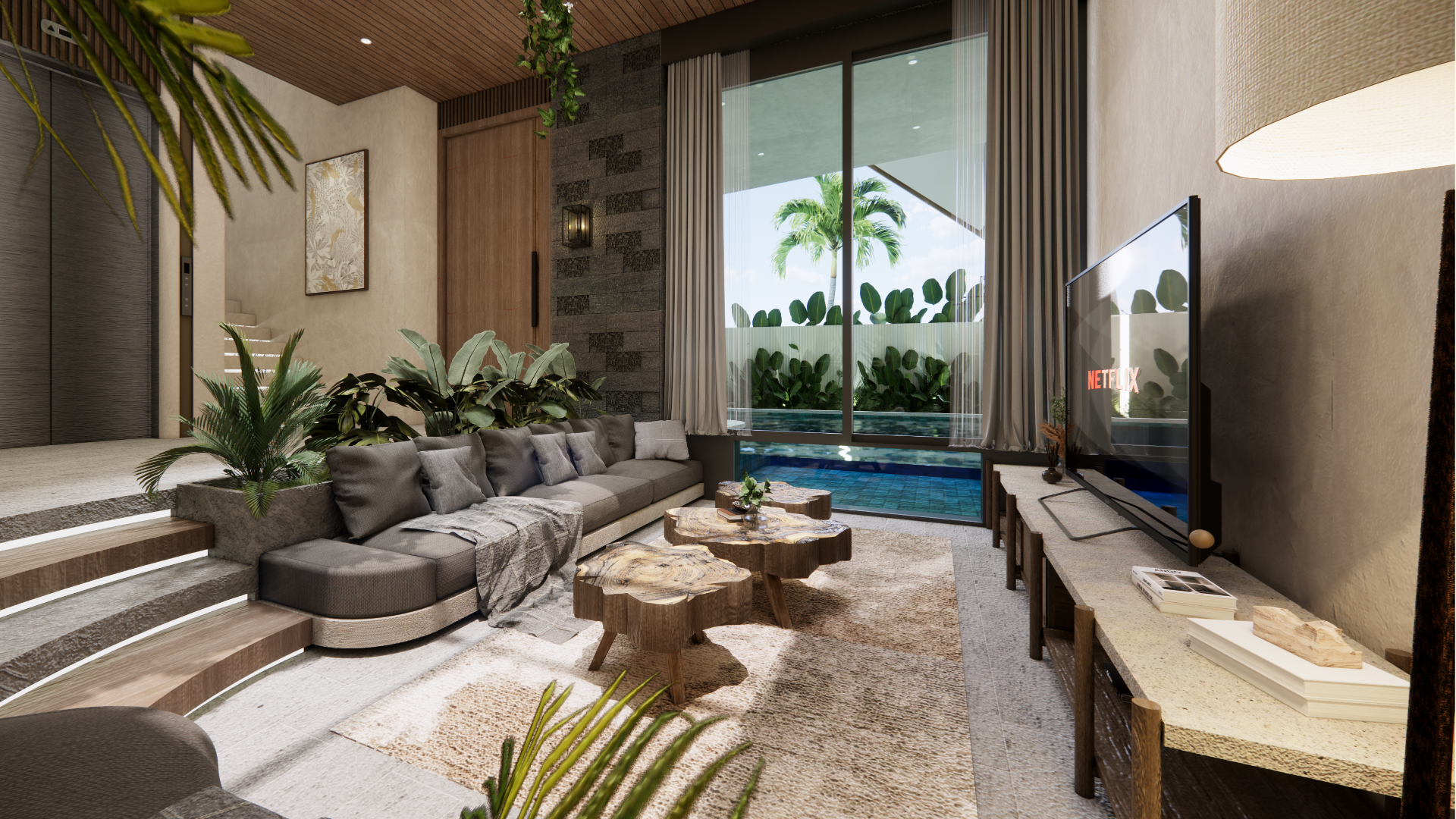
Softscape brings life, movement, and climate response to the landscape. It includes the trees, shrubs, groundcovers, lawns, vines, and soil that make a project feel alive—but it’s not visual decoration. Softscape design is a systems approach to climate buffering, spatial softening, and long-term landscape health.
In high-end villas and resorts, it must be planned with the same rigor as structure or MEP—layered, zoned, sourced, and sequenced with the full build.
Softscape Design Considerations for Bali Projects
- Most project sites in Bali suffer from compacted soil, poor drainage, or construction contamination. Softscape starts with rebuilding the soil—grading, composting, aeration, and soil testing where needed.
- Group species by sun/shade exposure, wind protection, and irrigation zone. Avoid one-size-fits-all planting blocks.
- Use vertical layering (canopy, sub-canopy, shrub, groundcover) to create density, privacy, and climate control. Mass plant small specimens instead of using oversized showpieces.
- Every softscape zone must be maintainable. No plant beds behind walls or inside awkward planters with no rear access. Include mulch zones and clear borders to reduce weeding and define separation.
- Fast-growing tropical plants can destroy paving, walls, and pools. Use root barriers for aggressive species and avoid planting large trees near hardscape.
Material Strategy
- Use native or climate-adapted tropical plants to reduce dependency on chemicals or irrigation.
- Avoid overly manicured designs—high labor cost, low resilience.
- Consider long-term plant growth when spacing—don’t overcrowd for instant effect.
- Specify soil mixes and planting medium per species (not generic topsoil).
- Lock nursery sourcing during design—not left to contractor substitution.
Softscape Missteps That Cause Rework
| Issue | Result |
|---|---|
| No soil prep | Plants fail within 6 months, stunting or rot |
| Incorrect light zone matching | Foliage yellows, flowers fail, pest pressure rises |
| No maintenance access | Gardeners damage hardscape or plants |
| Trees too close to structure | Root uplift, wall cracks, drainage disruption |
Designing for Year-Round Performance
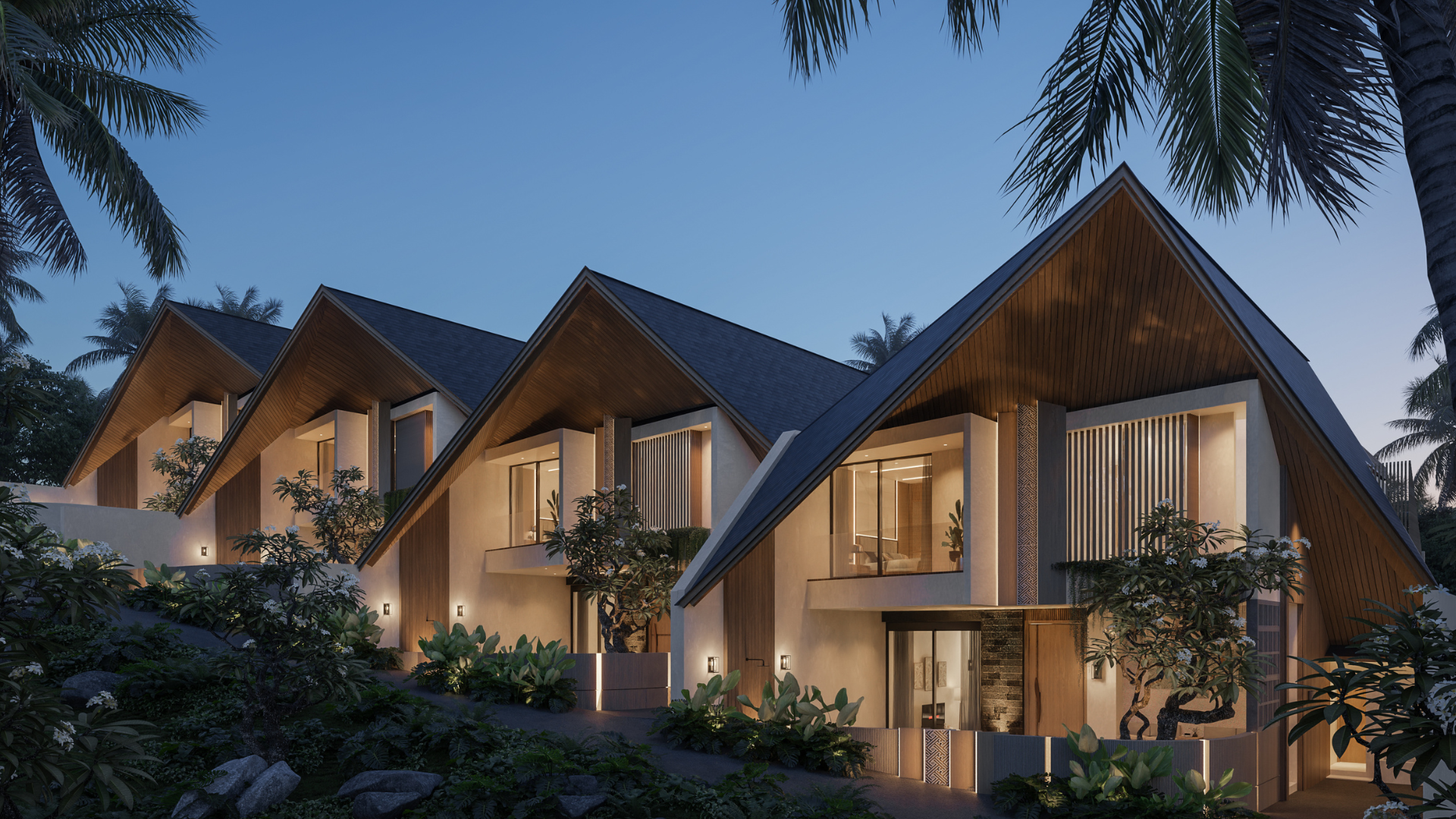
In Bali, one intense rainstorm can undo months of site work if drainage and irrigation aren’t engineered from the outset. These systems protect all other elements of landscape design from hardscape to plantin and are essential for the long-term health and functionality of the project.
Unlike temperate climates, Bali’s extreme wet and dry seasons demand dual-capacity systems: fast evacuation during rain, and consistent hydration through drought.
Drainage and irrigation are not services to be handed off to a subcontractor without design oversight. They must be specified, drawn, and calculated by the design team, then installed under supervision. Otherwise, failures are nearly guaranteed.
Drainage: Controlling Water Movement On and Below the Surface
- The entire site must be contoured to move water toward exits, not structures. Flat plots are rare—plan with topographic intelligence.
- Use perforated pipes, gravel trenches, and filter fabrics beneath lawns and planter zones to manage hydrostatic pressure.
- Where possible, use open stone channels or bioswales for visual integration. Closed PVC systems should be sized for worst-case rainfall loads.
- Hardscape zones must slope away from buildings and include slot drains or concealed channels. Standing water near foundations or walls leads to structural damage.
Irrigation: Efficient Water Delivery That Matches Climate and Usage
- Group irrigation by plant water needs and sun exposure. Avoid overwatering shaded zones or underfeeding exposed lawn.
- Use drip irrigation for beds to reduce evaporation. Sprays for lawn and groundcover should be pressure-calibrated and installed with buried valves.
- Automate systems with rain shutoff and programmable scheduling. Avoid contractor-grade timers with no user interface or data feedback.
- Confirm water source capacity—many villas rely on wells with low recharge rate or inconsistent pressure.
Critical Integration Points
- Coordinate drainage with slab and hardscape levels
- Finalize irrigation zones after planting plan is approved—not before
- Use dedicated utility routes for pipes—not through planting soil
- Include cleanouts and inspection chambers in all closed systems
- Test system flow rates and balance before planting begins
Landscape Design as a Core System
Landscape design is not soft. It’s structure, circulation, climate response, and experiential control delivered through organic material. In Bali, where outdoor space is not an accessory but a lifestyle standard, landscape design carries the same weight as architecture or engineering.
From grading and drainage to zoning and planting, every element must be designed, sequenced, and documented. Anything left to interpretation on-site gets value-engineered, improvised, or missed. High-end villa and resort builds demand integration.
Treating landscape as a complete system ensures that outdoor space lasts, and it elevates the entire project.
FAQs
1. When should landscape design begin in the project timeline?
Landscape design should begin at the architectural concept stage, not after construction documentation. Early integration allows grading, drainage, circulation, and outdoor zoning to be coordinated with structure, MEP, and interior planning. Delayed involvement typically results in compromised layouts, inefficient drainage, and reactive solutions that increase cost and reduce performance.
2. What’s the difference between softscape and hardscape?
Softscape refers to all living elements—planting, soil systems, turf, and ecological layers. Hardscape includes built components such as paving, retaining walls, decks, and circulation paths. These systems must be designed in parallel, as their interaction determines drainage behavior, usability, and long-term durability.
3. Is local plant sourcing reliable in Bali?
It can be reliable when managed professionally. The key is working with established nurseries, pre-selecting specimens, and verifying plant health and maturity. Without oversight, substitutions and inconsistent quality are common, which can affect both visual outcome and long-term survival rates.
4. Do all villa projects in Bali need irrigation systems?
Yes. Despite seasonal rainfall, irrigation is essential to maintain plant health during dry periods and to ensure consistent establishment. Properly designed systems—typically drip irrigation for planting beds and controlled spray for lawns—improve efficiency and reduce water waste.
5. What causes most landscape failures?
Failures are typically systemic, not aesthetic. Poor drainage, inadequate soil preparation, incorrect plant selection, and weak coordination with architecture are the primary causes. These issues are rarely budget-driven—they result from lack of planning and integration.
6. How does landscape design affect guest experience in resorts?
Landscape design shapes the entire spatial experience. It controls arrival sequencing, privacy, microclimate, shading, and visual framing. Well-executed landscapes enhance comfort and perception of quality, while poor execution can undermine even high-end architectural design.
7. How important is drainage in landscape design?
Drainage is a critical performance layer. In tropical environments, unmanaged water leads to erosion, plant failure, and structural issues. Effective drainage design integrates grading, subsoil systems, and surface runoff control to protect both landscape and built elements.
8. What role does soil preparation play in long-term success?
Soil quality directly impacts plant health, growth rate, and maintenance requirements. Proper soil preparation—including conditioning, drainage improvement, and nutrient balancing—is essential. Planting into untreated or compacted soil significantly reduces survival and performance.
9. Should landscape design prioritize aesthetics or functionality?
Both must be aligned, but functionality is foundational. Aesthetic intent must be supported by systems that ensure usability, durability, and ease of maintenance. Landscapes that prioritize appearance without resolving performance typically degrade quickly.
10. How does landscape design impact maintenance costs?
Design decisions directly influence long-term maintenance. Plant selection, irrigation efficiency, material durability, and access for upkeep all determine operational cost. Well-planned landscapes reduce ongoing maintenance, while poorly designed ones require continuous correction and higher expenditure.