

Engineering Design for Villas and Resorts in Bali
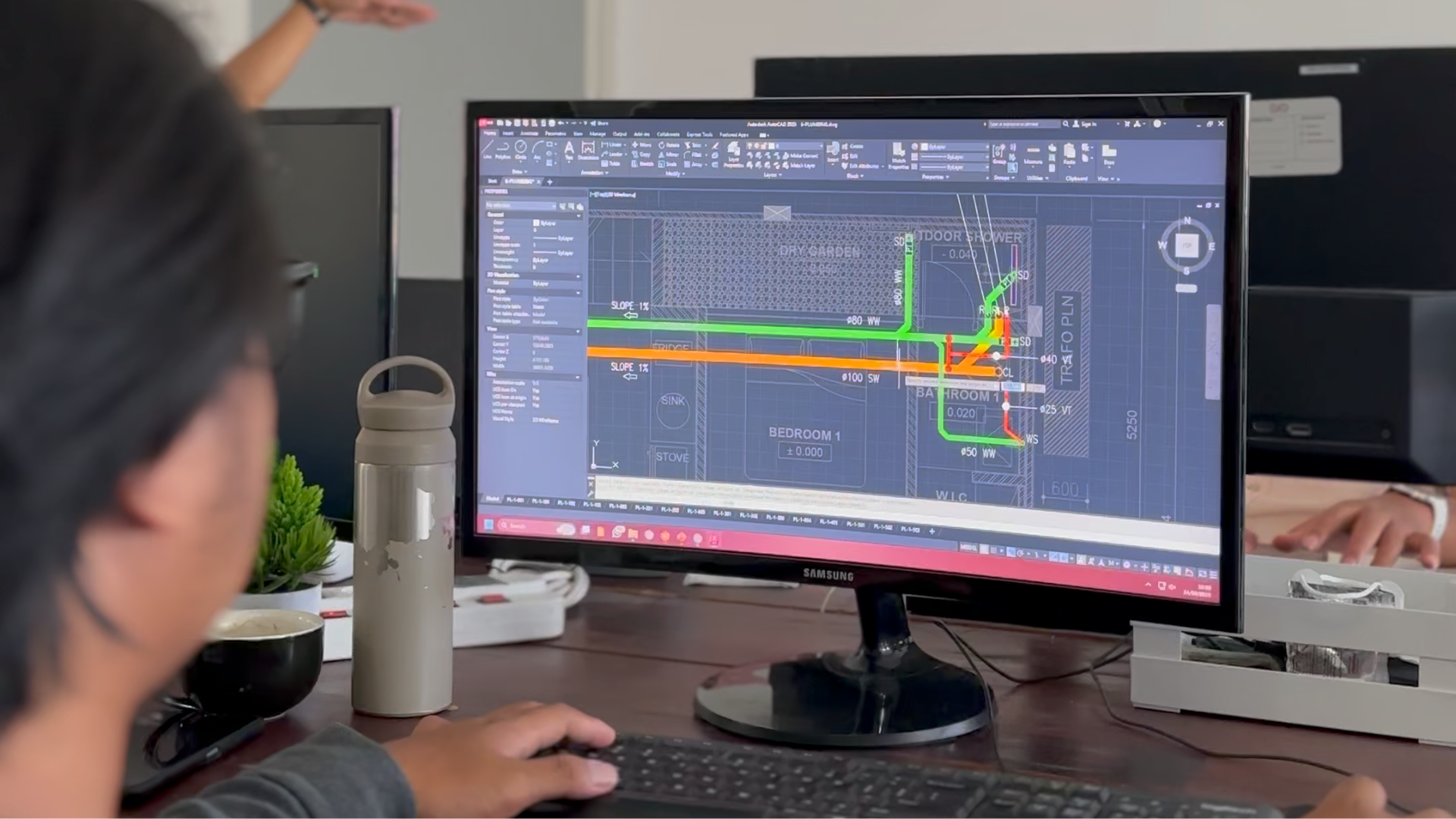
Villa and Resort Engineering Design is a foundational layer that defines whether architecture performs, construction flows, and systems sustain long-term use. Yet, in many Bali-based projects, engineering is brought in too late, and not treated as a core design driver.
That approach leads to poor integration between structure, MEP, architecture, and interiors, causing inefficiencies, cost blowouts, and post-construction failures.
Integrated engineering design corrects this by combining Structural Engineering and MEP (Mechanical, Electrical, Plumbing) services into a coordinated system that aligns with architecture, interiors, procurement, and construction methodology.
In real terms, this includes:
- Determining optimal structural spans, depths, and load paths that match the architectural massing
- Designing MEP systems that are concealed, maintainable, and cost-effective over the building’s life cycle
- Anticipating climate challenges (humidity, corrosion, rain load, drainage) that impact structural and mechanical performance
- Ensuring that services do not conflict with design intent (e.g. ducting through featured ceilings, pipes behind stone cladding)
- Producing clear, coordinated documentation for contractor execution without guesswork
The Role of Early Engineering Involvement
Without Early Engineering | With Integrated Engineering |
|---|---|
Clashes between structure and layout | Structural grid matches design flow |
Poor ceiling heights due to MEP routing | Mechanical systems concealed by design |
Undersized drainage or AC load | Systems designed from verified loads |
Overbuilt foundation cost | Optimized based on actual load calcs |
Site delays from unclear specs | Tender-ready coordinated documentation |

Controlling Climate, Comfort, and Maintenance
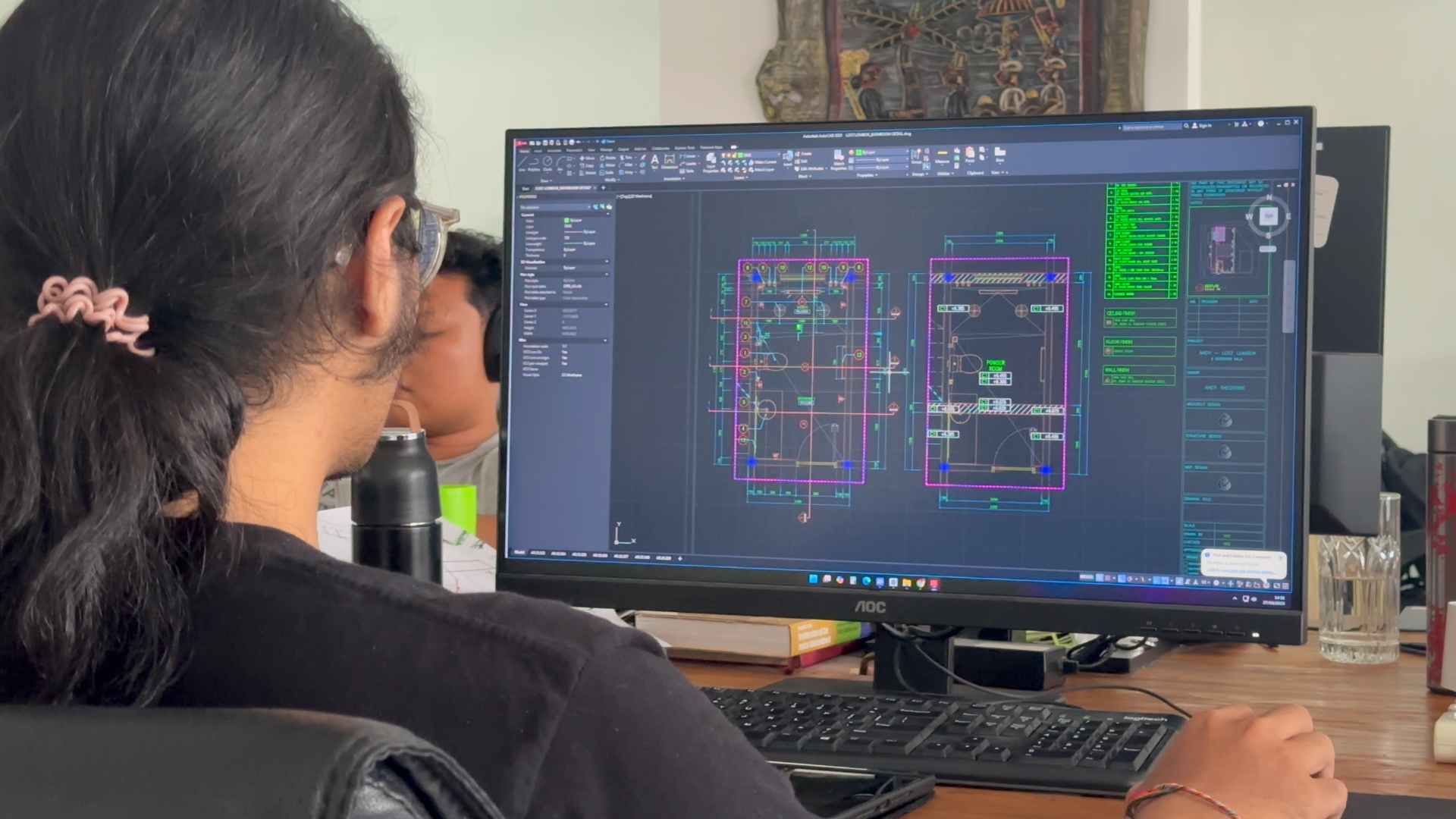
In Bali’s climate, mechanical design is about controlling moisture, managing internal temperatures, and ensuring guest comfort through reliable air movement and fresh air supply. Done right, mechanical systems remain invisible but essential. Done wrong, they become the source of mold, noise, and ongoing maintenance issues.
Engineering teams must produce early-stage mechanical layouts during schematic design. These layouts should be updated in tandem with architectural changes and issued in all IFC drawing sets. Local climate behavior, high humidity zones, and long-term maintenance must be factored into system choice and placement.
Mechanical Systems That Matter in Villa and Resort Projects
| System Element | Function | Best Practice |
|---|---|---|
| Cooling Systems (AC) | Provides thermal comfort via split or VRV systems | Load calculations based on room volume, glazing, shading, and usage |
| Airflow Routing | Delivers cooled air to rooms through coordinated ductwork or cassettes | Plan mechanical zones during concept; match ceiling heights and structure |
| Condensate Drainage | Removes moisture from indoor units | Integrate slope and access routes into floor or soffit plans |
| Fresh Air Intake | Supplies ventilation in enclosed spaces | Use mechanical intake/exhaust in low-ventilation zones (e.g. bathrooms) |
| Outdoor Unit Positioning | Houses compressors and external equipment | Account for sound, ventilation clearance, and future maintenance access |
Why Coordination Is Critical
Poorly coordinated mechanical design leads to:
- Exposed ducting or visible AC lines breaking ceiling visuals
- Clashes with lighting, structure, or joinery
- Improvised condensate drainage that causes water damage
- Oversized or underperforming units due to lack of load analysis
Integration Touch points
To avoid errors and retrofit fixes, mechanical systems must be coordinated with:
- Ceiling and soffit layouts
- Electrical and plumbing routing
- Structural beams and slab recesses
- Joinery and false wall cavities
- Outdoor service zones (for units and maintenance)
Power, Lighting, and Infrastructure Planning
Electrical design in high-end villa and resort projects involves distributing power, integrating lighting systems, and planning infrastructure that supports usage patterns, technology, and long-term reliability. Every part of the system must align with architecture, interiors, and mechanical services—early and accurately.
This includes both power supply and control systems, structured to match how the space will be lived in, operated, and maintained.
Core Electrical Deliverables in a Coordinated Design Process
- Load Calculations based on actual usage profiles, including AC, lighting, kitchen, pool systems, and AV/IT
- Circuit Distribution Plans to separate usage zones, reduce overload risk, and enable maintenance
- Switching Layouts based on real movement and use of the space—not generic grids
- Power Outlet Positioning coordinated with furniture and joinery to ensure usability
- Lighting Layout and Fixture Planning with a focus on consistency, symmetry, and ceiling design integration
- Emergency and Backup Systems where required, particularly in remote or unstable grid locations
What Requires Cross-Discipline Coordination
- Reflected ceiling layouts
- Furniture and interior zoning plans
- Joinery detailing for integrated lighting or hidden outlets
- Mechanical and plumbing routing (shared pathways, clearance zones)
- Structural grid (to manage vertical conduit drops or panel positioning)
Examples of Common Oversights and Their Consequences
| Missed in Design Phase | Effect During Construction or Operation |
|---|---|
| Switches placed without room flow logic | Confusing guest experience, requires rewiring |
| Outlets not aligned with built-ins | Visible or inaccessible outlets behind cabinetry |
| Panel location chosen after slab pour | Trenching or wall-cutting required to relocate |
| Lighting not aligned with ceiling details | Visual imbalance, lighting hot spots, or glare |
| Load underestimated | Inadequate power, breaker trips, need for upgrade |
Execution Standard
Final electrical design packages should be issued with the IFC set. These must include:
- Full SLD (Single Line Diagram)
- Load schedule and panel board details
- Lighting and switching layouts by room and level
- Power outlet plans tied to joinery and equipment
- Conduit routing strategy for embedded and exposed systems
All specifications should match available local infrastructure and product sourcing in Bali, or include alternative options with tested supplier capability.
Managing Water Supply, Waste, and Pressure
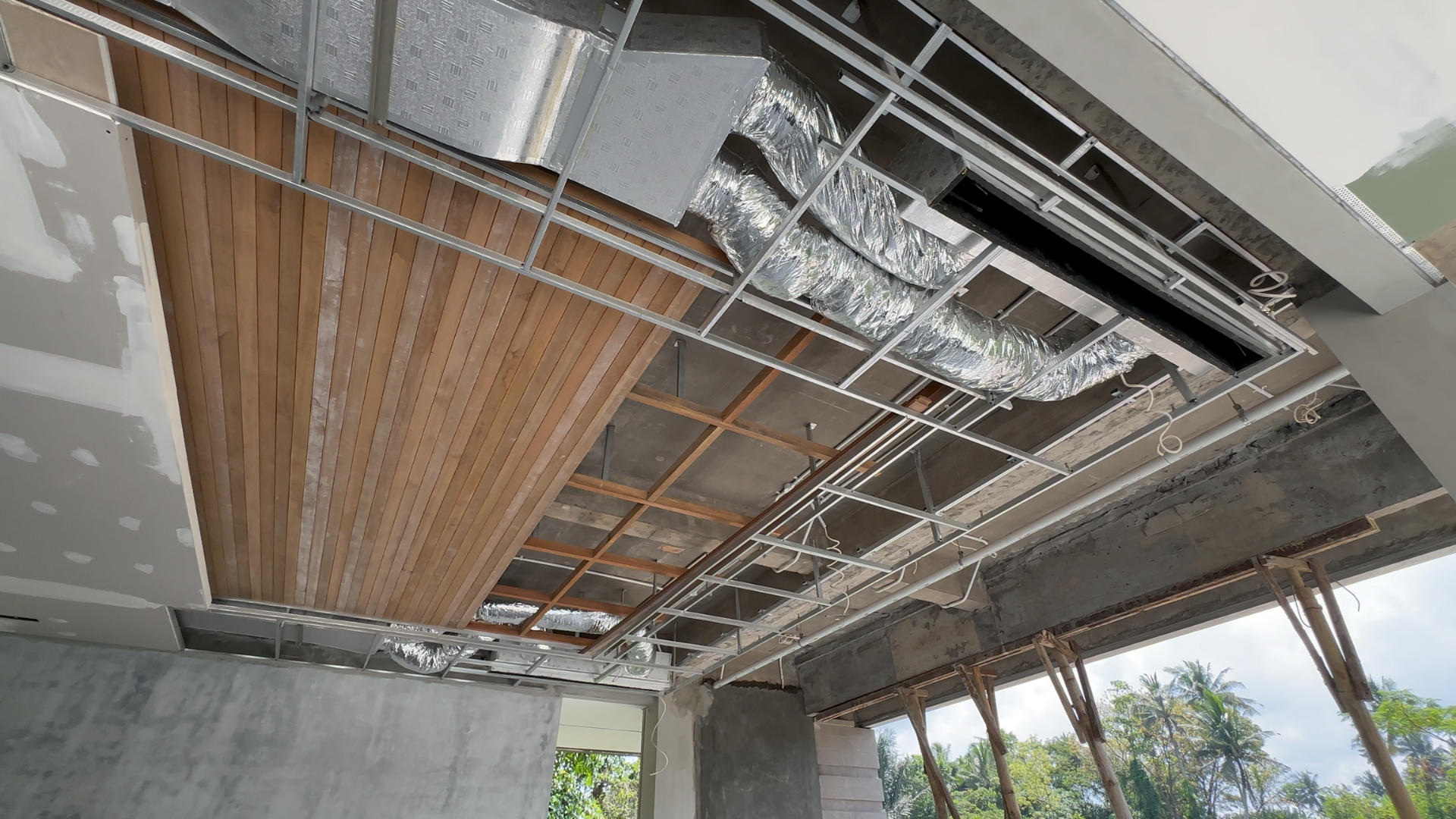
Plumbing design in villa and resort projects is far more than routing pipes. It’s a critical infrastructure layer that affects waterproofing, service access, finish quality, and long-term performance. Every fixture, drain, and pipe must be positioned with foresight—based on pressure zones, fixture types, equipment compatibility, and future maintenance needs.
Without a well-coordinated plumbing plan, water systems become one of the most expensive sources of delay, damage, and post-handover failure.
Scope of Plumbing Design in High-End Projects
- Water Supply Layouts — Define pipe routes from the main supply through pressure zones to each fixture
- Cold & Hot Water Loops — Ensure pressure balance and proper mixing; consider recirculation for large villas
- Drainage System Design — Coordinate slope, access, and routing for both black water and grey water integrated with your Landscape Design
- Sanitary Fixture Coordination — Confirm exact models and installation requirements before slab and wall pours
- Rainwater & Storm Drainage — Prevent pooling and infiltration, especially around slab edges or rooflines
- Pump & Tank Integration — Align with site power capacity, zoning, and maintenance access
Bali-Specific Plumbing Considerations
- Rain intensity requires aggressive drainage planning
- Many imported fixtures have long lead times or mismatched install specs
- Tropical humidity increases risk of mold or failure with poor waterproofing
- Underground tanks must be placed with soil stability and access in mind
- Local contractors often default to PVC or PPR without pressure verification
Execution Standard
- Architectural bathroom and kitchen layouts
- Interior design finishes (wall-hung vs floor-mounted, tile transitions, etc.)
- Electrical and mechanical equipment zones (for water heaters, pumps, controllers)
- Structural zones (for slab drops, beams, vertical risers)
- Civil engineering (for external drainage, septic or STP integration)
Example: What’s Locked in the Plumbing IFC Set
| Drawing or Schedule | Purpose |
|---|---|
| Water Supply Schematic | Shows pipe diameter, pressure, material, and connection points |
| Drainage Layout | Indicates fall direction, venting, cleanout locations, and fixture links |
| Sanitary Fixture Schedule | Matches each bathroom, kitchen, and wet area to the exact fixture model |
| Equipment Schedule | Lists pumps, tanks, heaters, filters, valves with technical specs |
| Penetration Coordination Set | Aligns plumbing routes with slab and wall build-ups, structural zones |
Designing for Site, Soil, and Seismic Risk in Indonesia
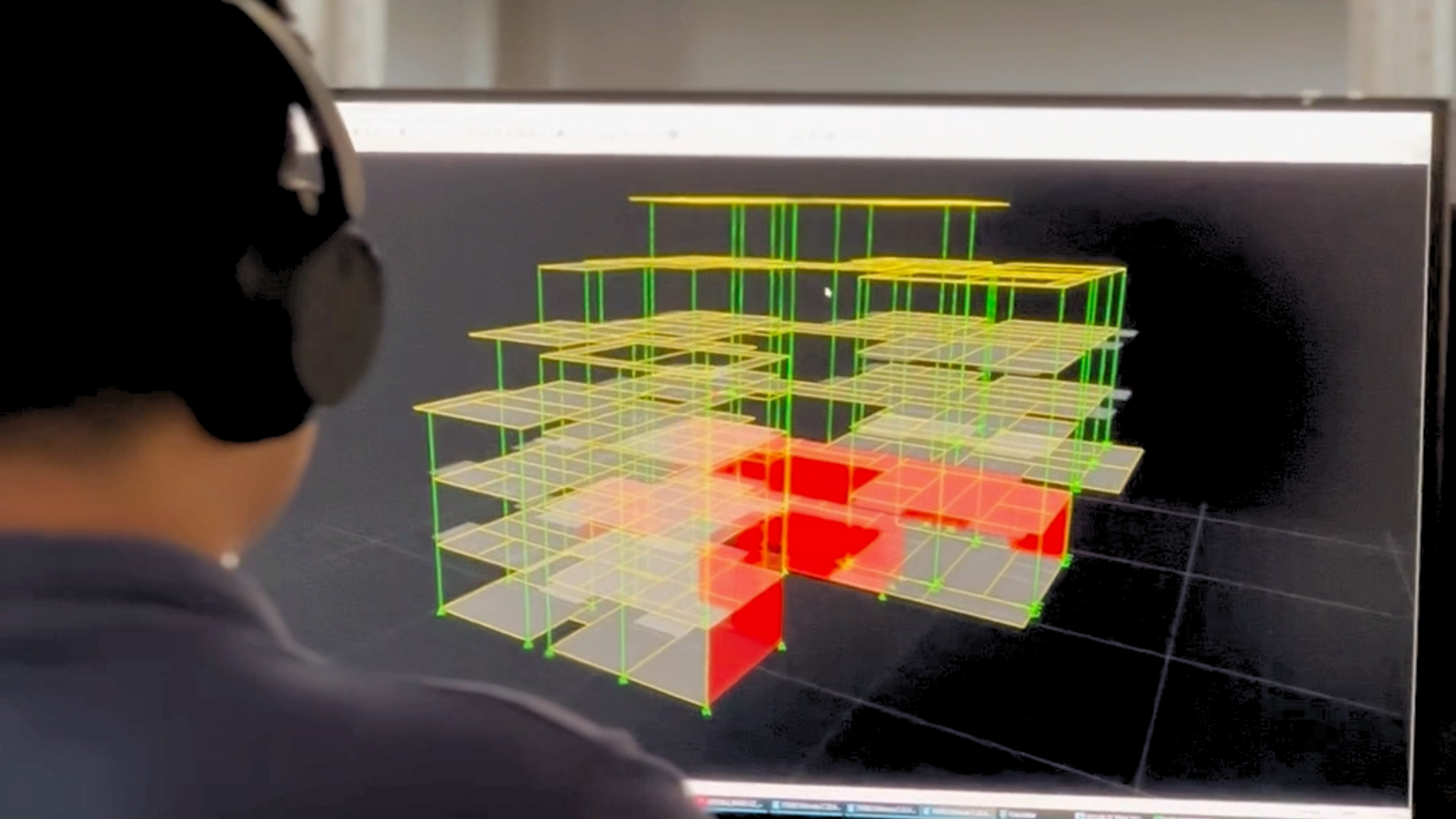
Structural analysis is the foundation of every safe and cost-effective build. In Indonesia, especially in Bali this process must account for local soil conditions, tropical weather cycles, and active seismic zones. It’s not just about safety; structural overdesign wastes budget, while under-design puts lives and investments at risk.
A full structural analysis ensures the foundation, frame, and roof system are tailored to real load demands and local constraints. not generic engineering assumptions.
Structural analysis must precede final architecture. It informs slab thickness, beam depths, roof profiles, and overall structural logic. No villa or resort should break ground without a soil test, full load model, and seismic-verified design set.
Core Deliverables in Structural Analysis
- Load Calculations — Based on site-specific data, architectural form, and material selections
- Foundation Design — Sized and reinforced per soil test results and structural demand
- Beam and Column Sizing — Optimized to match floor span, ceiling height, and interior clearance
- Retaining Wall Calcs — Engineered for lateral pressure, water load, and tie-in with drainage
- Seismic Load Compliance — Structured to meet or exceed SNI 1726:2019 (Indonesian Earthquake Code)
- Wind Load Calculations — Per site orientation and local wind patterns
Execution Workflow for Structural Analysis in Bali
- Soil Investigation: Conduct SPT or CPT testing for bearing capacity and profile
- Architectural Coordination: Review massing, slab levels, cantilevers, and wall locations
- Preliminary Load Modeling: Simulate dead/live load, seismic, wind, water, and equipment
- Code Compliance Check: Align design to SNI, ASCE, and local regulatory thresholds
- Final Structural Report: Issue full analysis, foundation design, beam/slab sizing, and detailing
- Drawings + BOQ: IFC-ready structural plan set and material take-off for accurate costing
Why Structural Analysis in Bali Must Be Site-Specific
| Factor | Bali-Specific Relevance |
|---|---|
| Soil Conditions | Volcanic soils, coastal sand, or clay zones affect bearing capacity |
| Seismic Activity | Bali is in an active earthquake zone; all builds must meet seismic code |
| Typhoon-Grade Winds | Villa roof designs must resist uplift and shear from seasonal winds |
| Slope and Retaining Load | Many villas are built into hillsides; retaining wall design is critical |
| Flood Risk | Low-lying plots need elevated slab and flow-through strategies |

Translating Analysis into Coordinated Drawings
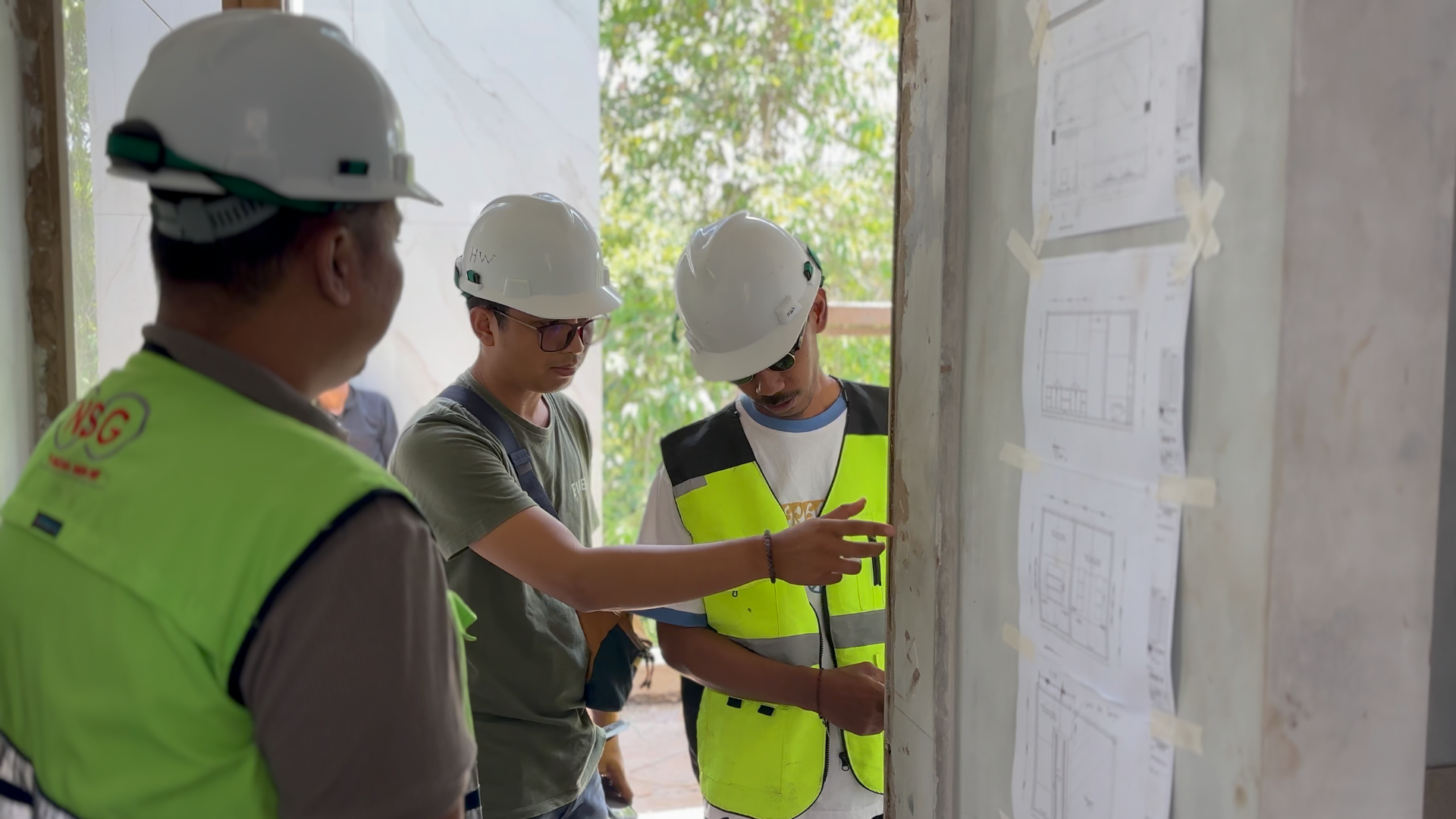
Structural design converts engineering calculations into real-world construction documents. In Bali’s villa and resort developments, this means more than beams and columns. It involves translating soil data, seismic loads, and architectural demands into a structure that builders can execute accurately, safely, and without improvisation.
What Structural Design Must Deliver
- Foundation Plans: slab-on-grade, footings, piles, or raft based on soil test
- Column & Beam Layouts: coordinated with room grids and ceiling zones
- Slab Thickness Plans: varied per span, usage, or rooftop loads (e.g. pools, planters)
- Stair Detailing: reinforcement, riser/tread sizing, support logic
- Roof Framing: especially critical on pitched, exposed, or cantilevered roofs
- Connection Details: for steel-to-concrete junctions, parapets, cantilevers, etc.
Build-Ready Drawings Include
- Actual pour stages and joint breaks
- All rebar sizes, spacing, and lap lengths
- Slab drops where interior zones change level
- Beam recesses for MEP crossings
- Embedment and dowel specs for structural transitions
- Construction sequencing where structural form complexity requires it
Local Missteps to Avoid
- Many Bali projects issue general plans without execution detail.
- Local contractors may substitute steel sizes or layout spacing if details are unclear.
- Critical coordination zones—like where lighting, drainage, and structural edges meet—are often missed.
- Rebar shop drawings are sometimes skipped entirely, leaving site teams to “interpret.”
Execution Standard
These drawings must sync with architectural elevations, MEP pathways, and ID coordination zones. Errors in alignment lead to misbuilt forms, costly demolition, or design compromise.
A complete structural design set includes general plans, section cuts, connection details, and full BOQ tied to the design. These drawings must be locked before any contractor pricing or slab pour occurs. If the structural drawings don’t align with architecture and MEP, the project absorbs risk structurally and financially.
Defining Standards, Materials, and Execution
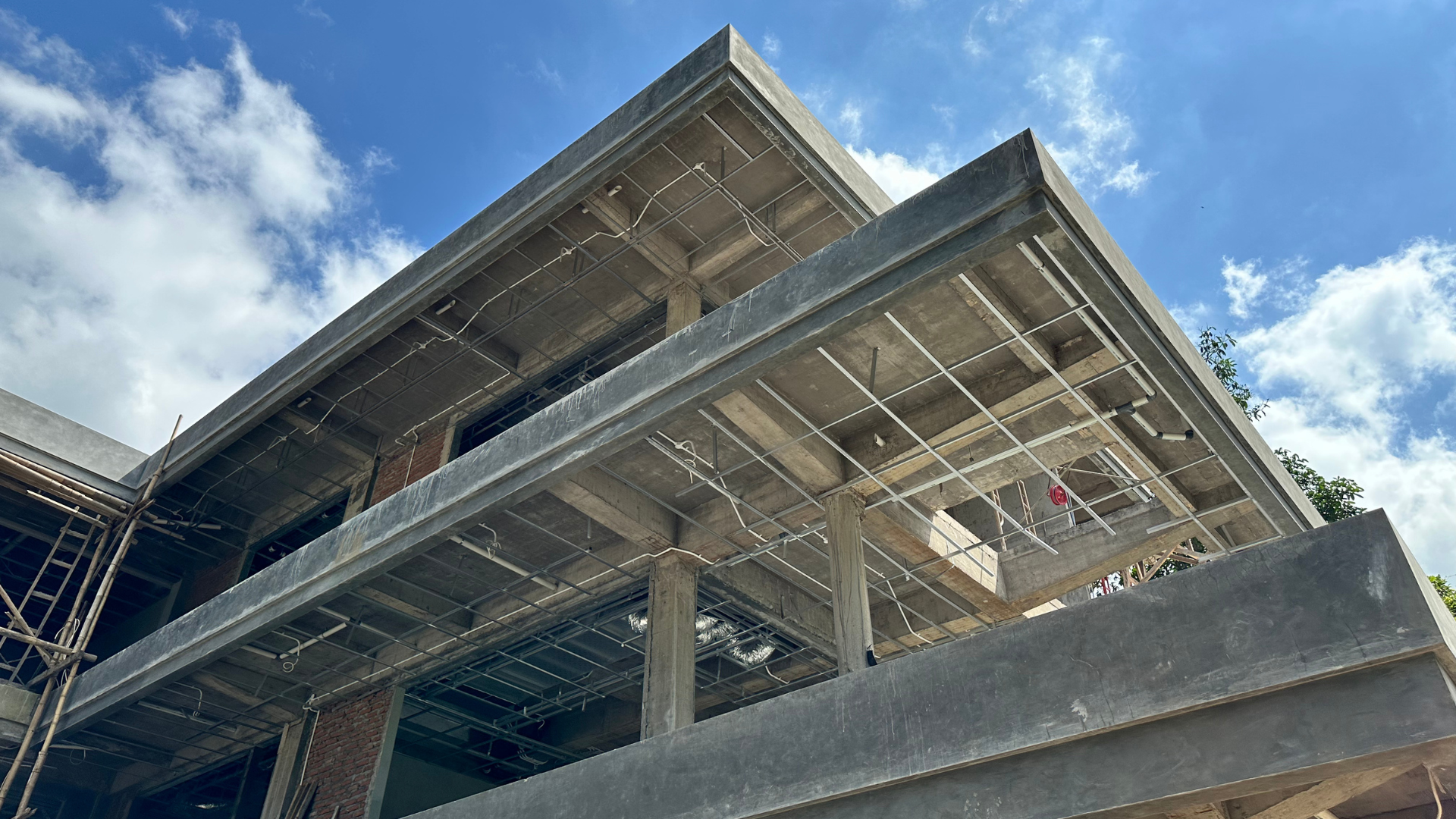
Technical specifications are the written control layer of engineering. While drawings show the “where” and “how,” specs define the “what”—what materials must be used, what performance criteria must be met, and what installation methods are required.
In Bali’s villa and resort projects, clear specifications protect design intent and reduce variation risk from local substitution, miscommunication, or incomplete interpretation.
Specs should be issued as a separate document, fully aligned with drawings, and referenced in BOQs and contracts. They should use internationally recognized standards where possible (SNI, ASTM, ISO), and list both minimum acceptable performance and any proprietary selections.
What Technical Specs Actually Control
- Material Grades: concrete strength (e.g. fc’ 25 MPa), steel rebar grade (e.g. U-50), pipe types (uPVC vs PPR)
- Installation Methods: curing periods, joint treatment, embedment, waterproofing applications
- Tolerances: slab level variation, verticality, rebar spacing, pipe slope
- Finish Standards: screed levels, concrete cover, alignment of embedded fixtures
- Testing Requirements: slump test, compaction tests, pressure testing for plumbing
Bali Context: Why Specs Are Critical
- Local vendors often push generic or downgraded materials unless specs are enforced
- Labour teams vary in skill level — detailed specs reduce dependency on interpretation
- Many consultants issue drawings without written specs, exposing projects to inconsistency
- Imported systems (e.g. pressurized plumbing, fire-rated cables) require local equivalents with verified specs
Example: Plumbing Spec Snapshot
- Pipework: PPR hot water pipes, PN20 minimum, electrofusion joints
- Drainage: uPVC, minimum fall 1%, cleanouts every 10m
- Waterproofing: 3-layer torch-on membrane with primer and protection board
- Sanitary Fixtures: all selected models to be ISO/EN certified, no substitutions without design team approval
How Specs Reduce Cost and Error
| With Clear Specs | Without Specs |
|---|---|
| Materials pre-approved during tender | Site substitutions and disputes |
| Installers follow standard procedures | Variation in work quality across teams |
| QA/QC team has clear benchmarks | Inspections based on opinion, not standards |
| Pricing is accurate and justified | Contractor padding due to uncertainty |
Designing for Outcome
Engineering Design in Bali’s villa and resort sector requires more than analysis. It demands technical accuracy, logic, execution planning, and coordination. From layout and material selection to finish detailing, each phase carries consequences if mismanaged.
Design must be locked early, coordinated across teams, and documented to the level where no contractor is left guessing. When structure follows layout, when materials suit the environment, when all work is organized, the results speak for themselves.
FAQs
When should engineering design start during the project?
Engineering must begin during concept design—not after architecture is “final.” Structural loads, MEP zones, and system logic all influence layout, massing, ceiling space, and slab levels.
Is a soil test really necessary for villas in Bali?
Yes. Soil conditions vary drastically across Bali—from dense volcanic rock to loose coastal fill. No foundation design should proceed without a proper SPT or CPT test.
What makes engineering design different in Bali compared to other regions?
Seismic activity, intense rain cycles, inconsistent utility infrastructure, and limited site access all make engineering in Bali unique. These must be designed for at the outset—not corrected on-site.
Can MEP systems be standardized across villas?
No. Each project’s size, use case, occupancy pattern, and room layout changes mechanical and electrical loads. Design must be customized—not copied.
Are local engineers enough, or do I need international support?
Local engineers must be licensed for permitting. However, international or hybrid teams often deliver higher control, better documentation, and tighter design integration—especially for complex or high-end projects.
How are engineering specs enforced during construction?
Only if they’re clearly written, issued as contract documents, and referenced in QA/QC checklists. Otherwise, specs are treated as optional, not mandatory.