

Villa and Resort Interior Design in Bali

Interior design in Bali’s villa and resort sector isn’t about picking paint colors or styling furniture. It’s a control layer—defining how a space functions, feels, and holds up long after handover. And when it’s not treated with structure, the result is cost blowouts, last-minute improvisation, and environments that don’t align with the original vision.
Professional villa and resort interior design integrates design intent into every part of project delivery. It determines wall positions before they’re built. It chooses materials that work in Bali’s heat and humidity. It sequences procurement of imported furniture, and it defines exactly how every surface, junction, and fitting is finished.
But this only works when design is delivered as a process—not as inspiration.
This article outlines the six best-practice components of structured interior design delivery for villas and resorts in Bali. These are the areas that control clarity, cost, sequencing, and outcome:
- Interior Layout
- Materials Selection
- Sample Palettes
- FF&E (Furniture, Fixtures & Equipment)
- Visual Moodboard
- Details and Specifications
Each one plays a distinct role in translating design vision into built reality—without shortcuts, friction, or misalignment. If your interior design process doesn’t cover all six, you’re not managing the outcome—you’re leaving it up to interpretation.
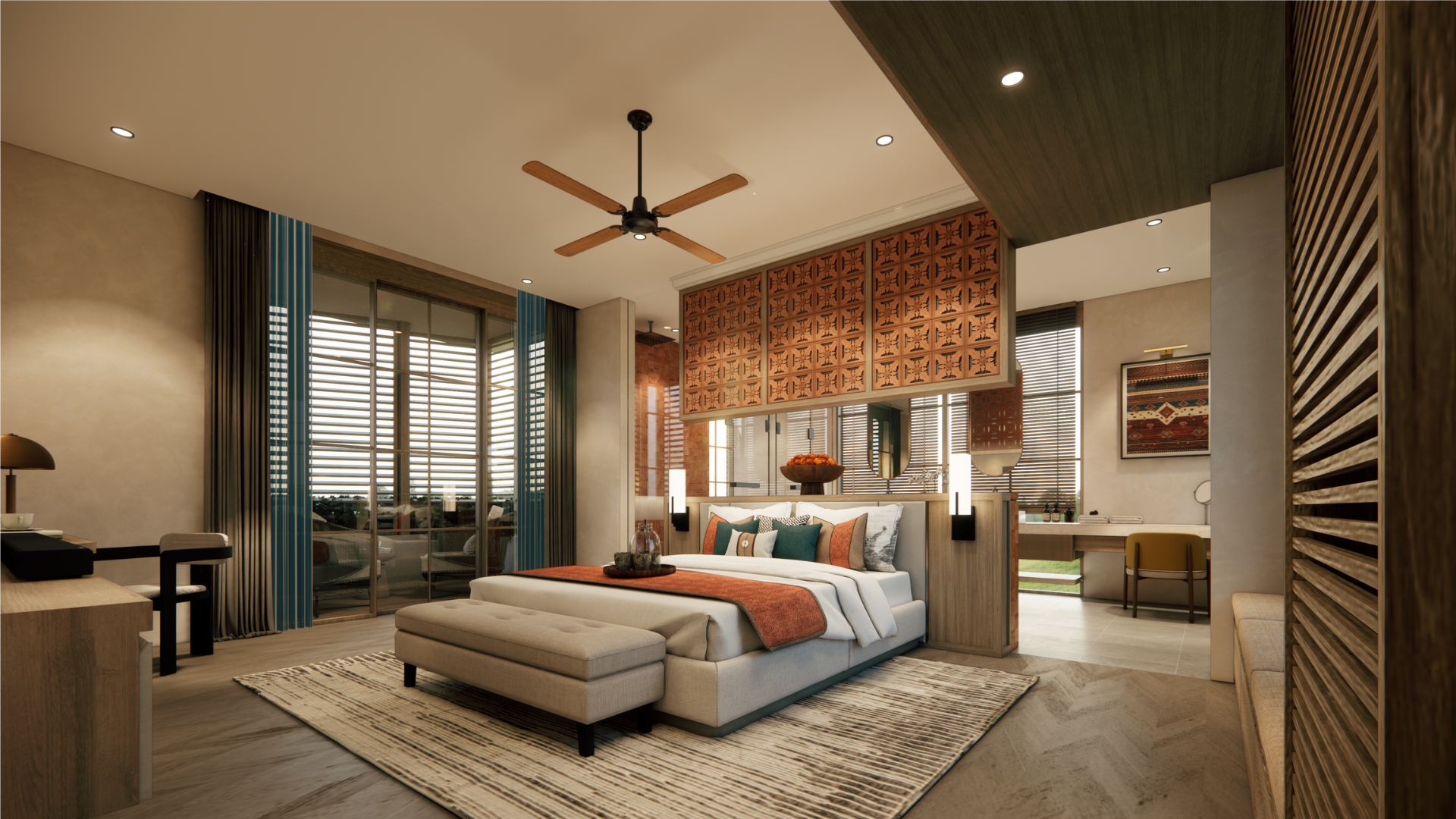
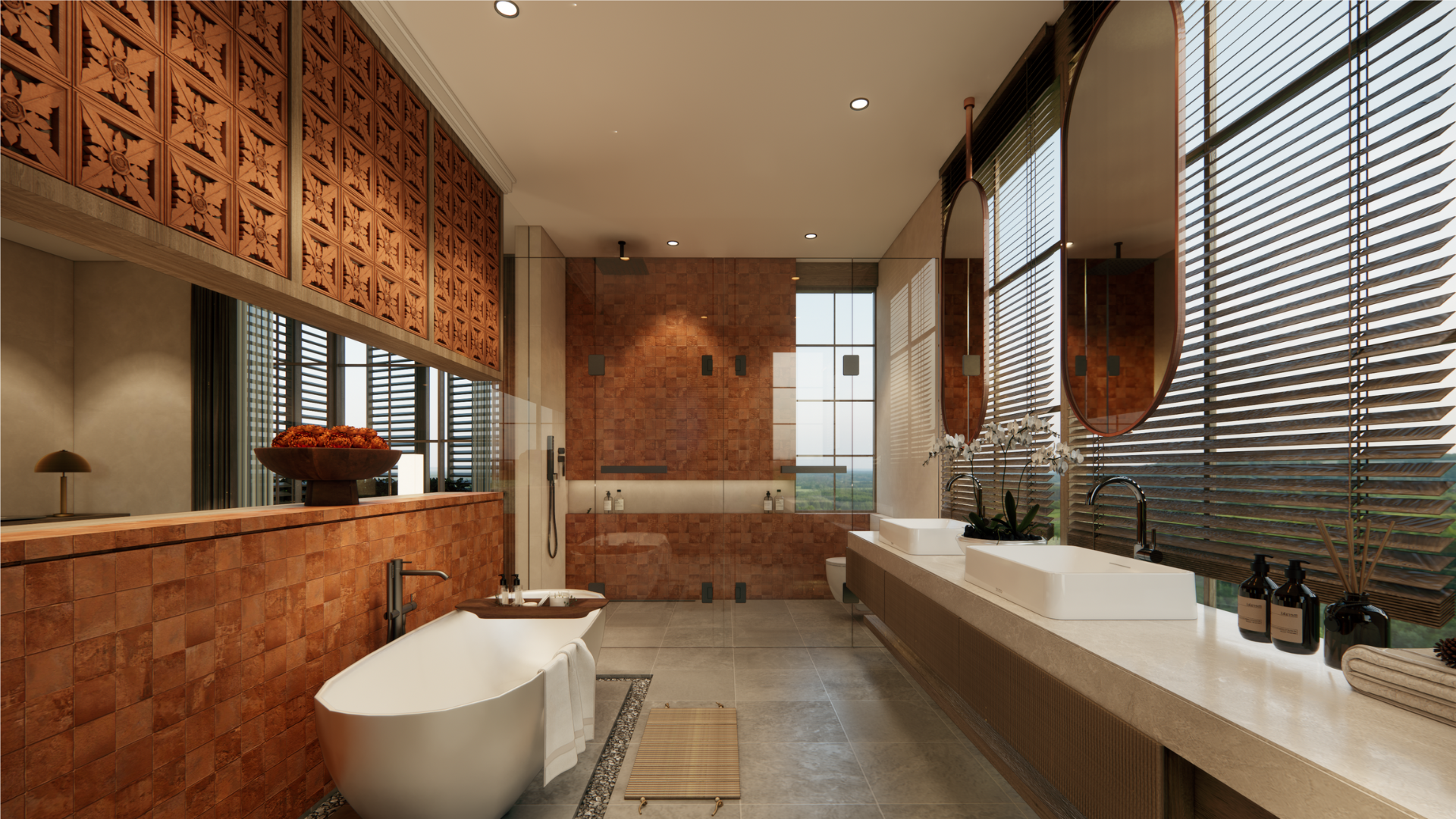
The Strategic Foundation of Villa and Resort Interior Design
Interior layout is far more than furniture placement. At the ultra‑premium end of villa and resort interior design, layout is a strategic discipline that aligns architecture, structure, MEP, finishes, sight‑lines, imported furniture, and guest experience from day one. Without it, design intent is compromised, trades get misaligned, and cost and time spiral.
Why Top Design Firms Make Layout the First Check‑point
Spatial logic before finish decisions: Leading firms map guest experience, circulation flows, views, and furniture‑dominant zones before specifying finishes. This ensures architecture supports use rather than forcing furniture to adapt.
MEP & structural overlay: In a resort build, ceiling heights, cast‐in place beams, lighting grids, and HVAC ducts must be coordinated with layout early. A layout that ignores this causes trade clashes and corrective costs.
Indoor‑outdoor integration: For Bali builds in particular, layout must preserve seamless indoor‑outdoor transition, natural light, cross‑ventilation and pool / terrace orientation. Without that, luxury spaces feel generic.
Furniture‑first thinking: High‑end interiors specify major furniture and fixture footprints early: large sofas, custom joinery, art walls. Layout must lock what these require so nothing is retrofitted.
Proportions, sightlines & hierarchy: Premium resort interiors use generous volumes and controlled views. Layout design firms consistently highlight that spatial hierarchy and flow are the unspoken luxury signals.
What a Well‑Managed Layout Process Looks Like
- Phase 1 — Program & Zoning Analysis: Map guest vs staff flow, private vs public areas, service zones, circulation loops.
- Phase 2 — Furniture/Joinery Footprint Lock‑down: Identify fixed furniture, built‑in joinery, primary furniture modules and their clearances.
- Phase 3 — Structure & Services Integration: Overlay structural grid, ductwork, lighting layouts, plumbing lines. Re‑adjust walls or ceilings as needed.
- Phase 4 — 3D Layout Validation: Use 3D mock‑ups or sectional views in high‑end projects to confirm sightlines, furniture heights, and human scale.
- Phase 5 — Layout Freeze and Issue for Construction: Once approved, layout is locked—architectural and interior drawings issued, MEP and contractor start work. Changes after this are expensive.
Risks When Layout Is Left Late or Undervalued
| Issue | Luxury‑Build Impact |
|---|---|
| Walls moved to fit furniture post‑construction | Custom joinery must be revised, cost rises |
| Lighting points mis‑aligned with furniture zones | Guests feel wrong ambience, redesign lamps/tracks |
| HVAC outlets clash with upholstery | Re‑cut soffits or modify ductwork during finish stage |
| Sightlines intersect service zones | Low cost fix becomes visible defect, guest experience suffers |
| No indoor‑outdoor transition mapped | Pool/terrace link delayed, resort vibe compromised |
Builder‑Level Insight
Contractors execute what’s drawn. If interior layout isn’t resolved before IFC (Issued for Construction), you face one of two outcomes:
- The contractor improvises on site → misalignment, quality sacrifice
- Frequent RFIs and redesign during build → cost and delay accumulate
In other words: premium interiors demand a layout freeze that supports all trades.
Takeaway
Interior layout is the single most impactful early design discipline in villa and resort interior design. If it is treated as an afterthought, the rest of the six core delivery components will always be playing catch‑up.
Aligning Interior Design Vision
In villa and resort interiors, material selection defines both the look and long-term integrity of the space. But selecting finishes isn’t just about aesthetics. It’s a balance of climate performance, procurement realities, tactile quality, and aging behavior. That balance becomes even more critical in Bali, where tropical conditions, inconsistent supply chains, and high guest turnover demand exacting choices.
Why Material Selection Happens Early, with Precision
The material palette must be locked early enough to inform procurement schedules, detail drawings, cost control, and sample approvals. In luxury interiors, these decisions also shape brand identity, sensory experience, and the emotional tone of the space. Getting it wrong means rework—or compromises that show.
Core Evaluation Criteria for Material Selection in Bali
| Factor | What It Affects | Best Practice |
|---|---|---|
| Durability | Furniture wear, surface erosion, life span | Use marine-grade or UV-resistant finishes in exposed areas |
| Climate Compatibility | Expansion, mold risk, cracking | Avoid solid timber near wet zones; favor engineered, sealed materials |
| Supply Lead Time | Schedule risk, substitution, procurement workflow | Pre-lock finishes with realistic lead time buffers (8–14 weeks for imports) |
| Cost-to-Impact Ratio | Budget optimization without aesthetic compromise | Prioritize high-visibility surfaces for premium; downgrade hidden or low-touch |
| Aging Behavior | Patina, color shift, cleanability | Approve aging samples; test under Bali conditions where possible |
| Installation Tolerance | Site complexity, install cost, defect risk | Choose systems familiar to local trades, or supply full install guides |
Best Practice: Material Mockups and Sample Boards
- Develop material boards per zone: wet areas, bedrooms, communal spaces, outdoors
- Include real-life samples—not renderings—of stone, tile, timber, fabrics, hardware
- Present side-by-side with lighting simulation or test box
- Validate how materials behave under natural daylight, artificial lighting, and ambient humidity
Failure Point to Avoid
One of the most common risks in villa construction is selecting a “perfect” material in theory, then realizing it’s:
- Out of stock locally
- Unavailable in cut size needed
- Non-compliant with finishing specs
- Can’t be matched if damage occurs later
Procurement and detailing fall apart fast without early, locked material specs.
Takeaway
Interior design isn’t just about how things look, it’s about how they’re built, how they age, and how they behave in real conditions. Material selection is the turning point where concept becomes real-world constraint. It must be structured, interrogated, and locked before design integrity gets diluted.
Unifying the Visual Language
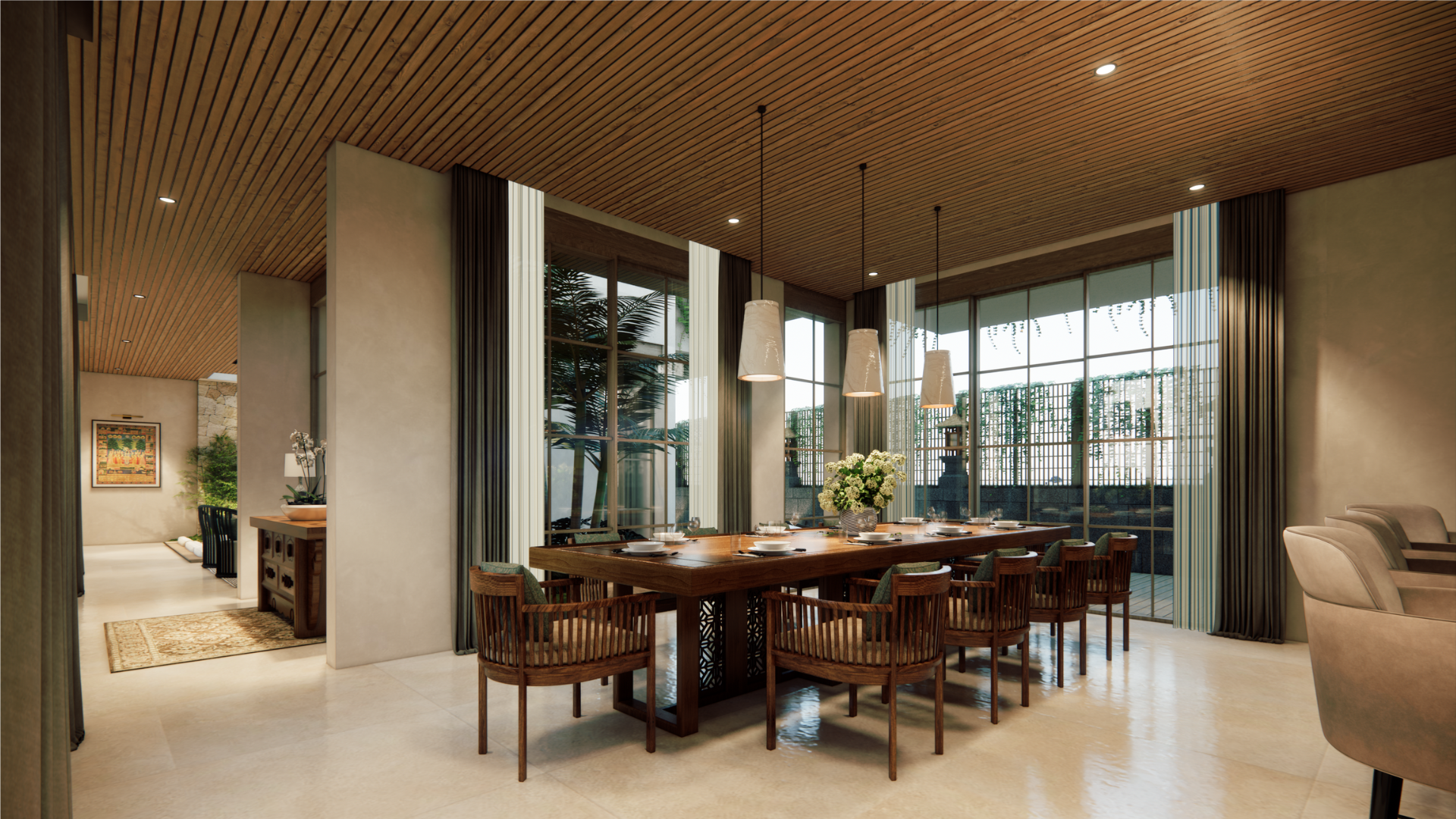
In a high-end Villa or Resort Development, no room exists in isolation. From private suites to shared lounges, the experience must feel intentional, flowing, and visually unified. Sample palettes are the tool that ensures every design decision—material, tone, texture, hardware—fits together before it reaches site.
They’re not moodboards. They’re technical, tactile references that define exactly how a design vision translates across different zones, functions, and lighting conditions.
Best Practice: Develop Room-Specific Sample Palettes Before Detailing Begins
Elite interior studios treat sample palettes as a critical step between concept and specification. Here’s how they handle it:
- Divide the project into functional zones: Guest suites, wet areas, common spaces, exterior, circulation, staff/service
- Create curated boards for each zone: Include finishes, fabrics, joinery samples, metal profiles, hardware, stone, paint, and floor/wall materials
- Include samples at real size: Ensure grain, color shift, texture, and feel match final intent
- Review in both natural and artificial light: Lighting changes tone perception, especially in timber, stone, and fabric
This process allows the design team, client, and site team to align before drawings are finalized or procurement begins.
Table: What a Strong Sample Palette Board Includes
| Component | Purpose |
|---|---|
| Key surface finishes | Walls, floors, ceilings – defines base layer |
| Accent materials | Stone, metal, woodgrain – sets contrast and identity |
| Fabric swatches | Furniture, curtains, cushions – tactile interaction |
| Joinery samples | Veneers, profiles, handles – lock visual junctions |
| Paint or stain cards | Tie overall tone and color balance |
| Room image reference | A single render or inspiration image for spatial intent |
Why It’s a Best Practice
Without defined sample palettes:
- Rooms feel visually fragmented
- Finish levels vary unintentionally
- Color shifts under different lighting go unnoticed until it’s too late
- Client approvals become reactive instead of proactive
- Procurement leads to substitutions that break design intent
With clear sample palettes:
- Finishes can be grouped into efficient procurement packages
- Contractors and trades have a direct physical reference
- FF&E alignment is simplified
- Detail drawing scope is reduced through visual clarity
Builder-Level Impact
Contractors don’t read moodboards. But they build from what’s in front of them. A physical, locked sample palette removes ambiguity, reduces RFIs, and keeps finish installation consistent across the project.
Takeaway
Sample palettes aren’t just a design step, they’re a control mechanism. When done right, they remove guesswork, unify the project’s visual language, and support faster, cleaner execution.
Furniture, Fixtures & Equipment That Define Experience
In villa and resort interior design, FF&E isn’t the afterthought—it’s the final layer that guests interact with, sleep on, sit in, and judge the space by. It occupies the majority of the visual field and directly influences tactile experience, acoustics, spatial scale, and brand perception.
Well-managed FF&E delivery starts early. Without a structured approach, the outcome defaults to reactive purchasing, inconsistent aesthetics, and expensive freight corrections.
Best Practice: Treat FF&E as a Design System, Not a Procurement List
High-end design firms use FF&E to shape the emotional and spatial impact of the environment. This goes far beyond picking furniture from a catalog.
Here’s how they structure it:
FF&E Delivery Workflow (Used by Tier-1 Interior Firms)
Phase | Action |
|---|---|
01 — Concept Match | Define aesthetic language aligned with palette, layout, and client intent |
02 — Space Validation | Layout checked against furniture clearances, sightlines, air circulation |
03 — Technical Review | Confirm materials, specs, and integration with power/lighting |
04 — Procurement Planning | Lead time analysis, supplier engagement, delivery coordination |
05 — On-site Installation & QA | Final placement, fixing, staging, punch list correction |
This ensures FF&E is integrated, not floating.
Functional Priorities in FF&E Specification
- Climate Compatibility: Avoid fabrics prone to mold, foam that collapses in humidity, metals that corrode. Outdoor vs indoor performance must be differentiated.
- Comfort and Scale: Luxury seating isn’t oversized—it’s ergonomically correct, proportionate to room size, and matched to ceiling height and lighting scale.
- Vendor Qualification: Bali is not the place for trial runs. Premium vendors or direct-import brands should be pre-vetted for quality control, packing, and DDP reliability.
- Integration with MEP: Don’t specify bedside tables until you’ve located outlets, switch plates, and lighting. AV and power must flow with the FF&E—not fight it.
Cost Exposure: The Real Risk of Under-managed FF&E
Poor FF&E planning is a top cause of luxury project friction. Why?
- Delayed imports hold up handover
- Substituted items break visual consistency
- Mismatch between drawings and on-site installs forces late-stage joinery or power fixes
- Uncoordinated install leads to damaged goods or poor placement
Every one of these costs time and money—and dents the guest experience before a guest even arrives.
Takeaway
FF&E isn’t decoration. It’s construction-level scope that controls comfort, functionality, and the final look and feel of the project. Managing it means locking down design intent, integration points, and procurement windows—not flipping through catalogues after plaster.
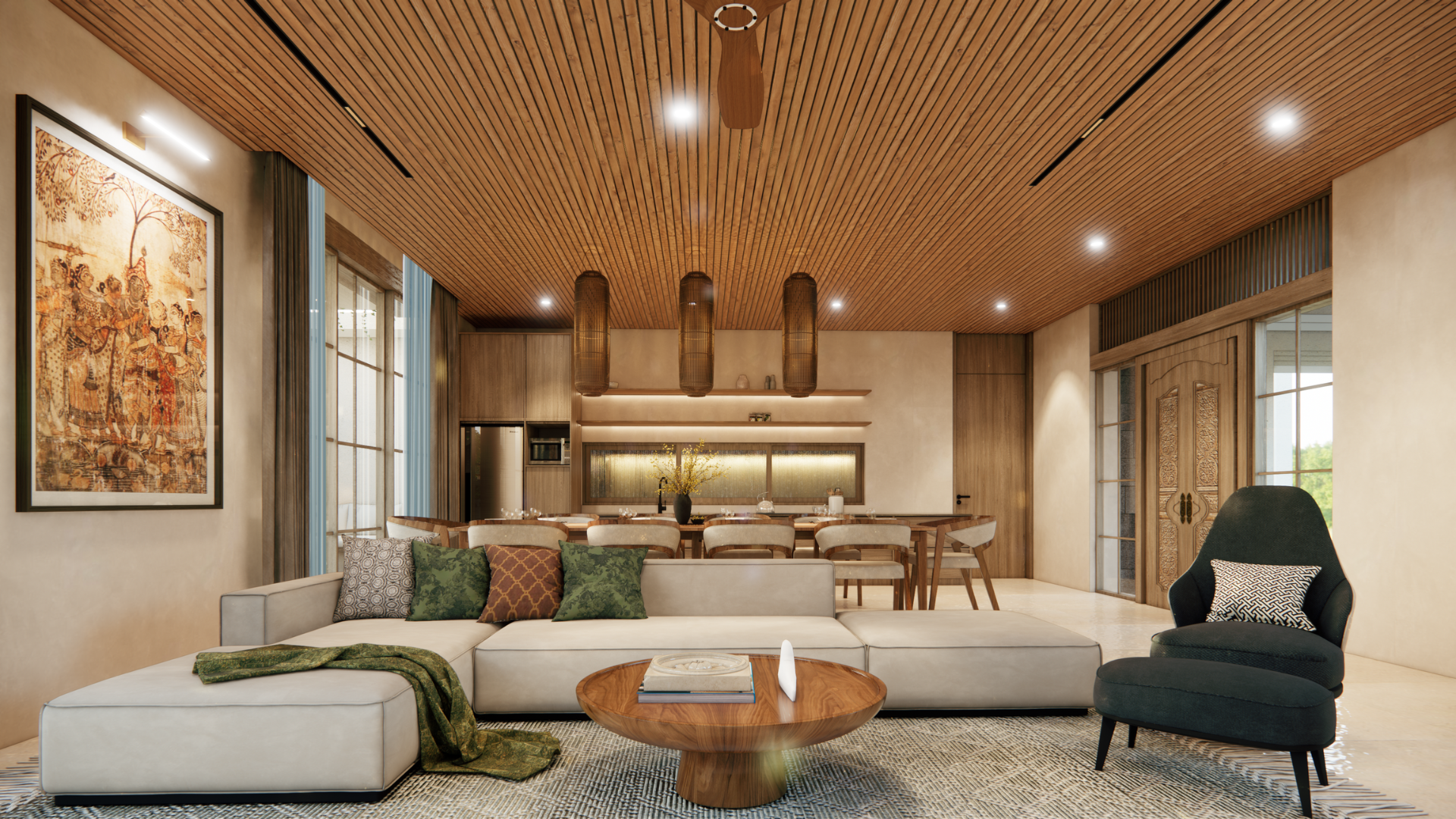
Translating Design Intent into Executable Reference
Moodboards are a visual control tool. In villa and resort interior design, they bridge the gap between abstract design ideas and actionable execution. Where drawings define measurements and specs, moodboards define tone, feel, and cohesion across materials, finishes, lighting, and styling.
When developed properly, a moodboard acts as a universal reference for client approvals, documentation alignment, and contractor clarity.
Best Practice: Build Moodboards as Project Control Tools
High-level design firms use moodboards to align multiple disciplines and decision-makers around a single visual direction. This happens long before 3D renders or technical specs are finalized.
A strong moodboard:
- Defines the intended atmosphere for each primary zone
- Aligns material samples, colors, metal finishes, and fabric textures
- Cross-references layout intent and functional hierarchy
- Remains consistent with the brand or experiential positioning of the villa/resort
Typical Moodboard Types in a Structured Interior Design Process
| Moodboard Type | Application |
|---|---|
| Master Palette Board | Overall color/material/finish direction for the project |
| Zone-Specific Boards | Bedrooms, wet areas, common zones, exterior entertainment areas |
| Furniture Style Boards | Tone and typology of FF&E: silhouettes, tones, finish levels |
| Lighting Concept Board | Luminaire types, color temperatures, integration techniques |
| Joinery & Detailing Board | Edge profiles, hardware, handles, miters, finishes |
These boards are used internally by design and documentation teams and externally for client alignment and contractor reference.
Why It Matters in Bali-Specific Projects
- Multinational teams often require a shared visual language across different time zones and disciplines.
- Site teams frequently include non-English-speaking workers — visuals increase understanding and reduce risk.
- Procurement substitutions are easier to catch if the board is clear about finish tone, texture, and form.
- Install teams can stage the build to match the intended design flow if the visual roadmap is precise.
Takeaway
A moodboard isn’t an optional extra, it’s a baseline visual control document. When built properly, it drives consistency from early approvals to on-site implementation and reduces friction between design intent and real-world execution.
Material Finishes for Execution
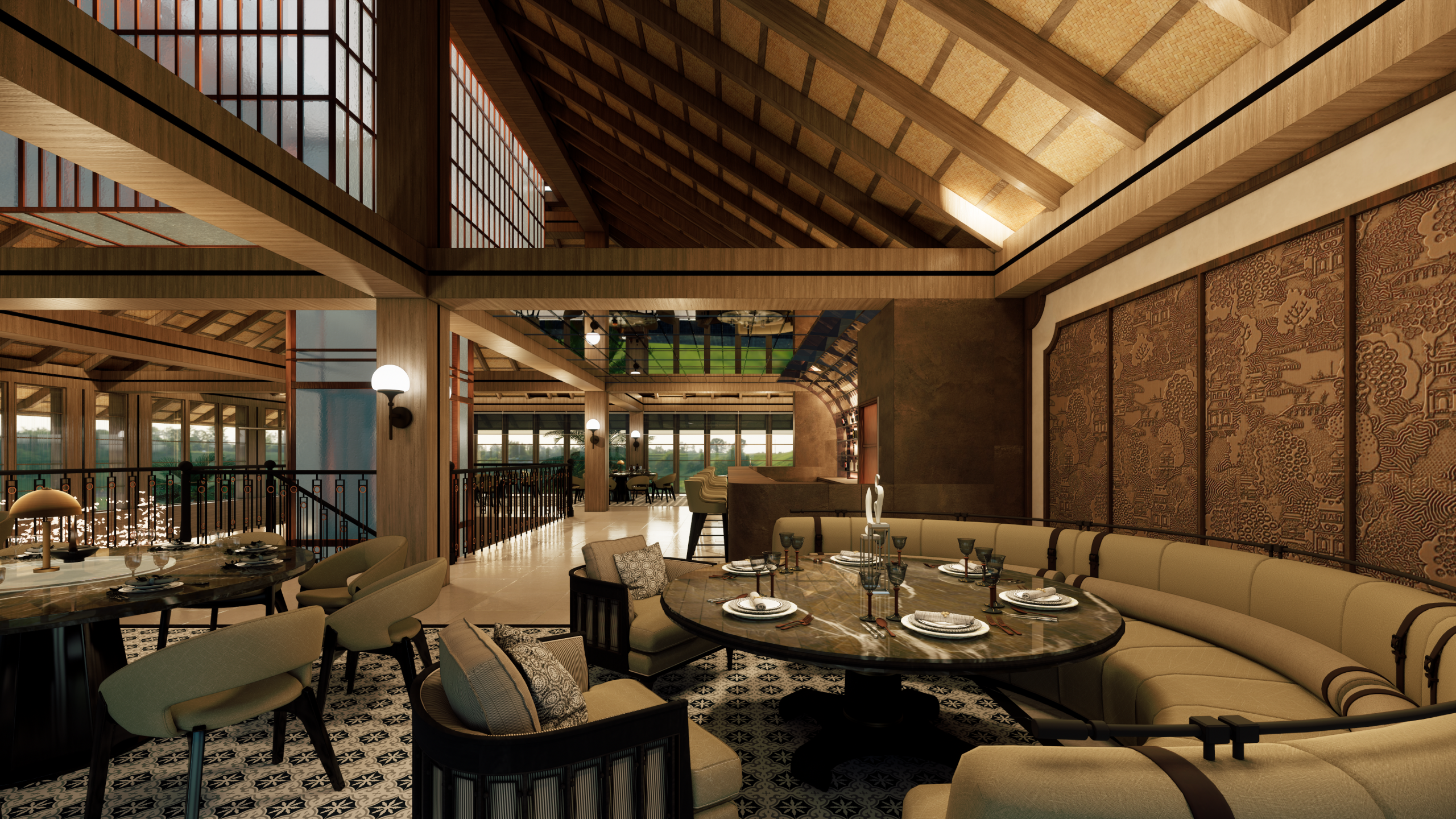
Details and specifications are the technical layer that translates design into construction. They define how materials meet, how edges resolve, how lighting is integrated, and how joinery is fabricated. In villa and resort projects, this layer removes guesswork and gives the contractor exact instructions to build the design as intended.
Best Practice: Finalize Specifications Before Tender or Site Mobilization
Professional design teams finalize specification packages before issuing drawings for construction or pricing. This includes:
- Finish schedules: room-by-room materials with codes, sizes, edge details
- Joinery packs: custom cabinetry drawings with material layering and hardware specs
- Hardware schedules: hinges, handles, pulls, exposed fasteners
- Lighting specs: model numbers, lumen output, beam angle, IP rating
- Plumbing and sanitaryware specs: brand, model, color, installation notes
- Installation detailing: thresholds, transitions, corners, reveal depths
This removes ambiguity and eliminates contractor improvisation.
Risk Impact of Missing or Incomplete Specifications
| Area of Omission | Result on Site |
|---|---|
| No detail for wall-to-floor junction | Grout lines misaligned, baseboard height inconsistent |
| Missing lighting install spec | Overcuts in ceiling, wrong Kelvin rating, shadowing |
| Undefined hardware finish | Mixed metals or inconsistent tones across rooms |
| Joinery built without edge detail | Exposed MDF, fragile miters, uneven overhangs |
| No spec for mirror backing | Safety issues, bad adhesion, long-term failure |
Client and Contractor Benefits
- Client: Clear expectations, fewer surprises, controlled variation exposure
- Contractor: Reduced RFIs, faster execution, fewer quality issues
- Designer: Protected design intent, smoother review cycles, less site rework
Takeaway
Specifications and detailing are not paperwork, they’re execution control documents. Locking them down means the build reflects the design with accuracy, speed, and quality.
Final Thoughts
Interior design in Bali’s villa and resort sector requires more than taste. It demands technical accuracy, climate logic, execution planning, and supplier coordination. From layout and material selection to FF&E and finish detailing, each phase carries real-world consequences if mismanaged—even on high-budget projects.
What separates a good result from a great one is not creativity. It’s control.
Design must be locked early, coordinated across teams, and documented to the level where no contractor is left guessing. When structure follows layout, when materials suit the environment, when FF&E is procured in sequence, and when moodboards and specifications guide the build—what you get isn’t just design. It’s a fully realized experience.
For villas and resorts, that’s the difference between “done” and “complete.”
FAQs
When should interior design begin during a villa or resort project?
Interior design should start during early architectural planning. The layout informs wall positioning, lighting strategy, service routing, and furniture zones. Waiting until after construction drawings are issued causes misalignment and costly revisions.
Is FF&E handled by the designer or separate teams?
In structured projects, FF&E is integrated into the design process from the start. The interior team should manage sourcing, vetting, specs, and delivery—ensuring everything aligns with layout, power points, and material palettes.
Can imported materials be used reliably in Bali?
Yes, but they require early lock-in and firm lead-time planning. Many imported items have 10–14 week lead times. Substitutions made late in the project often break visual and performance consistency.
What’s the difference between moodboards and sample palettes?
Moodboards define the overall tone and style of each space, using visual references. Sample palettes use physical materials—tile, timber, fabric—to lock specific finishes for procurement and detailing.
Is interior detailing necessary if I already have a contractor?
Yes. Contractors build to specification. Without joinery drawings, lighting integration details, and hardware specs, they’ll default to assumptions. That leads to design breakdown, poor finishes, and rework.
Do all villa projects need this level of interior design?
Any project aiming for consistency, durability, and a refined guest experience needs structured interior design—especially when building in Bali’s climate and dealing with complex supply chains.